Anyone involved in muscle building and sports nutrition often encounters a simple statement: The body can allegedly process only about 20 to 30 grams of protein per meal. Anything beyond that is simply expelled or deemed useless for muscle growth.
However, it is not that simple.
The human body does not have a fixed “protein limit” of 30 or 40 grams. Protein is digested, broken down into amino acids, and subsequently used for numerous processes. These include muscle tissue building and repair, enzyme and hormone production, and myriad other bodily functions.
Thus, the crucial question is not:
“How much protein can I absorb at all?”
Instead:
“How much protein is sensible under certain conditions to optimally support muscle protein synthesis and overall protein supply?”
Here lies the difference between digestion and absorption on one hand and muscle building on the other.
The body can absorb more than 30 grams of protein
The notion that the body cannot absorb, for example, 50 grams of protein from one meal is scientifically incorrect.
Proteins are broken down in the digestive tract into amino acids and smaller peptides. These then enter the bloodstream and are available to various tissues.
However, this does not mean that 50 or 100 grams of protein automatically become 50 or 100 grams of new muscle protein.
The body decides how the available amino acids are used. Some may be utilized for the synthesis of various tissues, some for other metabolic processes, and if needed, also for energy production.
A review by Schoenfeld and Aragon already demonstrated that higher protein intakes per meal might be associated with increased amino acid oxidation, yet additional amino acids are not automatically "lost".

So, where did the 20- to 30-gram rule originate?
The oft-cited number mainly stems from studies on muscle protein synthesis.
Research has shown that relatively moderate amounts of high-quality protein can strongly stimulate muscle protein synthesis in young adults after a meal. From this arose the practical recommendation to aim for about 20 to 40 grams of high-quality protein per meal.
The International Society of Sports Nutrition, for example, cites approximately 0.25 g of protein per kilogram of body weight or about 20 to 40 g of protein per meal as a general guideline for physically active people.
This, however, does not mean:
30 g = maximum absorption
but rather:
30 g can be a sensible amount for many to significantly stimulate muscle protein synthesis.
That is a big difference.

What happens to protein exceeding this amount?
Let's assume someone eats a meal with 30 grams of protein.
These 30 grams are not simply fully converted into muscle mass. At the same time, a meal with 60 grams of protein does not mean the additional 30 grams are automatically "wasted".
Amino acids are constantly required for various functions in the body.
Protein can be used for, among other things:
| Use | Function |
|---|---|
| Muscle Protein Synthesis | Building and repairing muscle tissue |
| Other Tissues | Renewal and building of body proteins |
| Enzymes | Support of numerous metabolic processes |
| Hormones and Signal Proteins | Regulation of various body functions |
| Immune System | Production of specific immune proteins |
| Energy Production | Amino acids can be used for energy if necessary |
| Glucose Formation | Certain amino acids can contribute to glucose formation |
| Storage | Protein is not stored as a large energy reserve like fat or carbohydrates |
Therefore, one should not view protein solely from a muscle-building perspective.
Muscle protein synthesis is not synonymous with protein absorption
This is where a misunderstanding arises in many protein-related discussions.
Protein absorption describes how much protein or how many amino acids from the digestive system enter the body.
Muscle protein synthesis (MPS), on the other hand, describes how much new muscle protein the body forms.
A meal with 50 grams of protein can indeed be digested and absorbed, even if not all 50 grams are used simultaneously for muscle protein synthesis.
This is comparable to a construction project: Delivering 100 bricks does not mean that all 100 are incorporated into the wall at the same moment. The materials can still be used later or in different areas.

Is there an optimal protein quantity per meal?
Yes – at least a reasonable range can be derived.
For many physically active individuals, a meal with about 0.25 to 0.4 g of protein per kilogram of body weight is a practical guideline.
For a person weighing 80 kg, this would be, for example:
80 kg × 0.25–0.4 g = around 20–32 g of protein
Other reviews suggest approximately 0.4 g/kg per meal to optimize muscle building, distributed across multiple meals. With higher daily protein intake, slightly larger amounts per meal may also be practical.
However, it is important to note: This is not a biological upper limit.
It is a practical recommendation, not a point where the body suddenly cannot process any more protein.
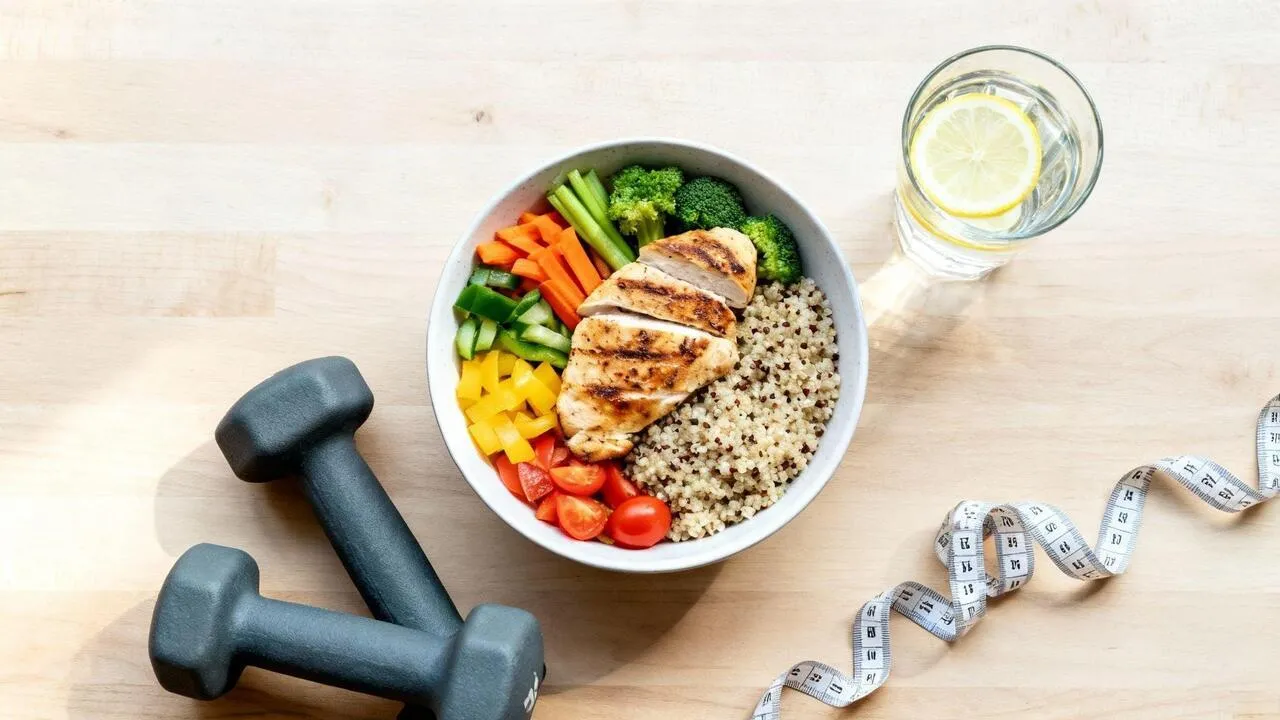
What happens if you eat 50, 70, or even 100 grams of protein?
This is where it gets particularly interesting.
A 2023 study examined the response to a very large protein portion post-exercise, comparing 25 g and 100 g of protein among other metrics.
The 100-g portion led to a larger and more prolonged anabolic response than the 25-g portion. The authors also observed increased availability of amino acids and their incorporation into various proteins.
This is an important result, showing that the notion of a hard ceiling at, say, 30 grams is overly simplistic.
However, one should not conclude from this that everyone should consume 100 grams of protein after every workout.
The study examined a specific situation, and a very large protein portion is not automatically the most efficient or pleasant strategy in practical nutrition.
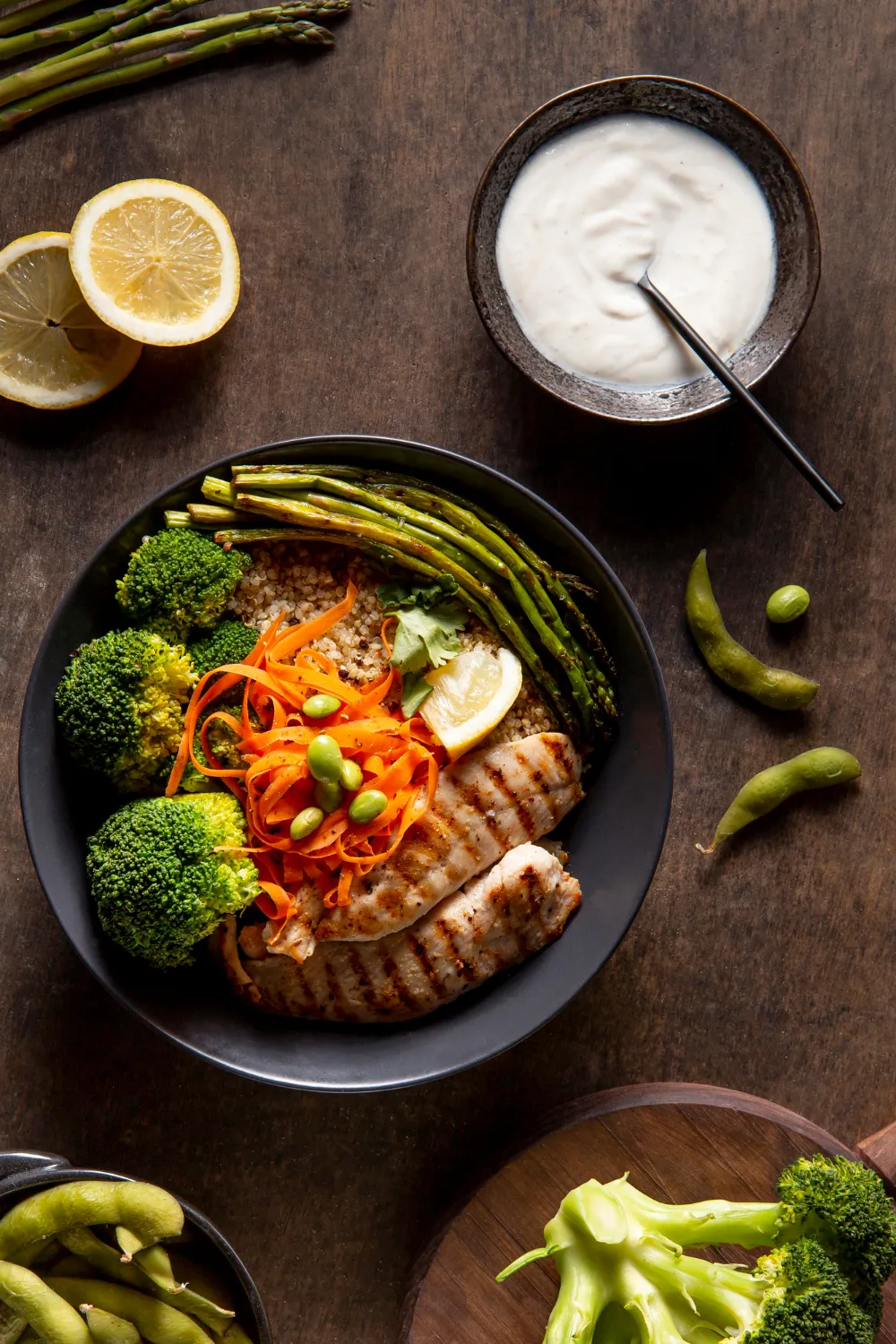
Is eating 100 grams of protein at once sensible or unnecessary?
For everyday life, an extreme protein portion is mostly unnecessary.
Someone, for instance, needing 140 grams of protein per day could theoretically distribute this amount in various ways:
| Distribution | Breakfast | Lunch | Dinner | Total |
|---|---|---|---|---|
| 3 Meals | 45 g | 45 g | 50 g | 140 g |
| 4 Meals | 35 g | 35 g | 35 g | 105 g + Snack 35 g |
| 5 Meals | 28 g | 28 g | 28 g | 140 g |
All three variants provide the same daily amount.
For muscle building, a relatively even distribution across several protein-rich meals can be practical. A review suggests about 0.4 g/kg per meal over at least four meals when aiming for high daily protein intake and an optimally even distribution.
This does not mean that an uneven distribution automatically prevents muscle building.

The crucial point is the total daily intake
When it comes to muscle building, it is not advisable to focus solely on the protein amount of a single meal.
Overall daily protein intake is significant.
A large meta-analysis involving 49 studies and 1,863 participants investigated the relationship between protein intake and strength training. Protein supplementation improved gains in lean mass and muscle strength during long-term strength training.
For many who regularly engage in strength training, a daily protein intake between approximately 1.6 g/kg of body weight per day is discussed as a sensible guideline for muscle building. Depending on training volume, energy intake, training status, and individual circumstances, higher amounts may be used.
The distribution of meals is important – but it does not replace ensuring sufficient total intake.
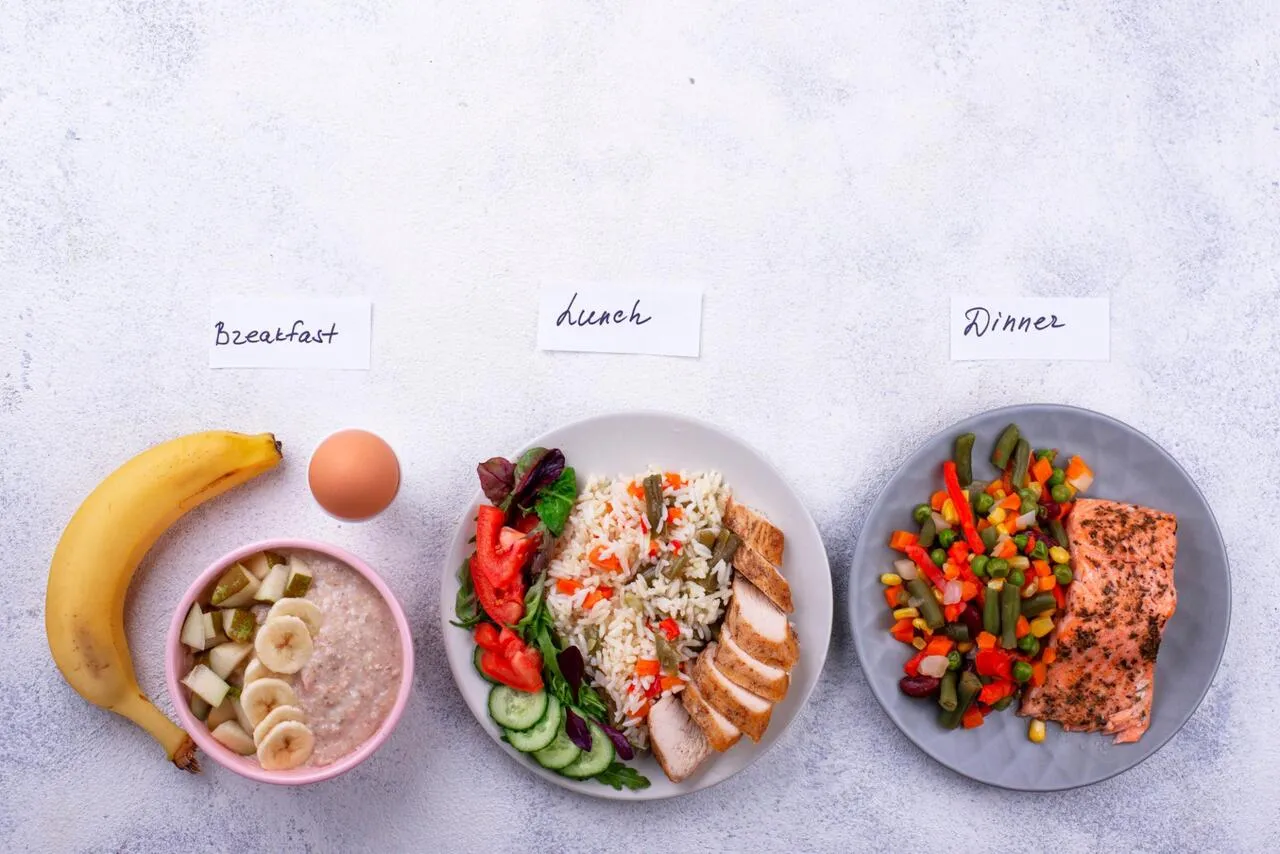
Example: How much protein might be sensible?
Consider a person weighing 75 kg who regularly engages in strength training.
With a daily protein intake of approximately 1.6 g/kg, this amounts to:
75 × 1.6 = 120 g of protein per day
These 120 grams could be distributed across four meals, for example:
4 × 30 g = 120 g of protein
This is a very simple and practical structure.
One could also eat 25, 35, 25, and 35 grams. It is not crucial that each meal contains exactly 30 grams.
The body does not function as a calculator that suddenly stops working at precisely 30.0 grams of protein.

Is protein immediately post-training particularly important?
Here too, there is a common myth: One must consume protein within minutes after a workout, or the chance to build muscle is lost.
Research suggests a broader time window.
Strength training increases muscle protein synthesis for an extended period. Protein intake near the workout can support this process, yet the significance of the exact timing depends on when the last meal was eaten and how large it was.
Those who ate a protein-rich meal shortly before training do not need to hastily drink a shake immediately post-last repetition.

Does protein quality matter?
Yes.
Not every protein source delivers the same composition of essential amino acids.
Of particular importance for muscle protein synthesis are essential amino acids, especially the amino acid Leucine.
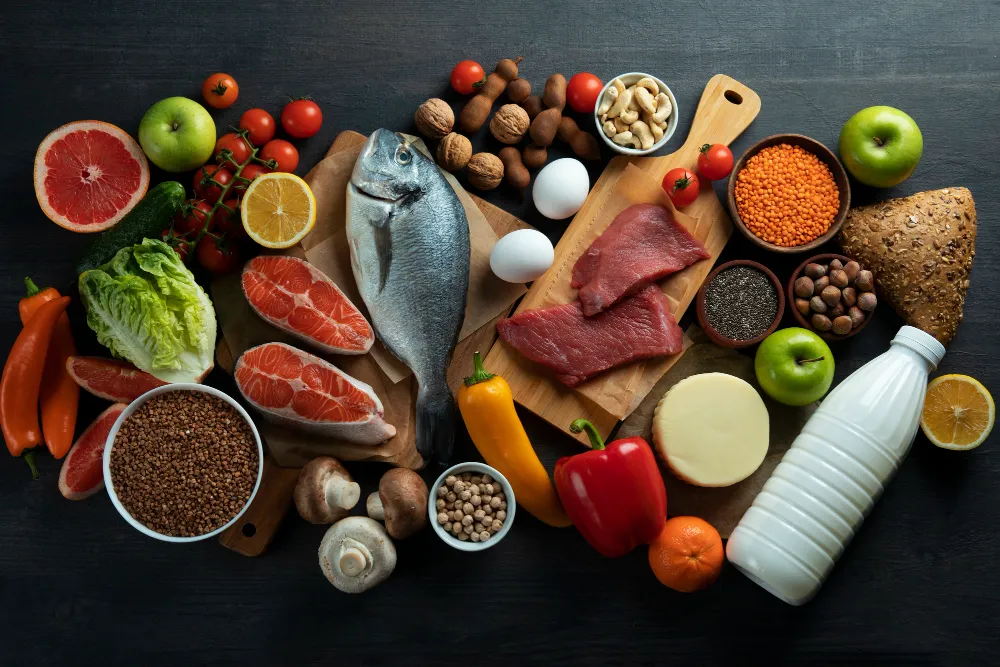
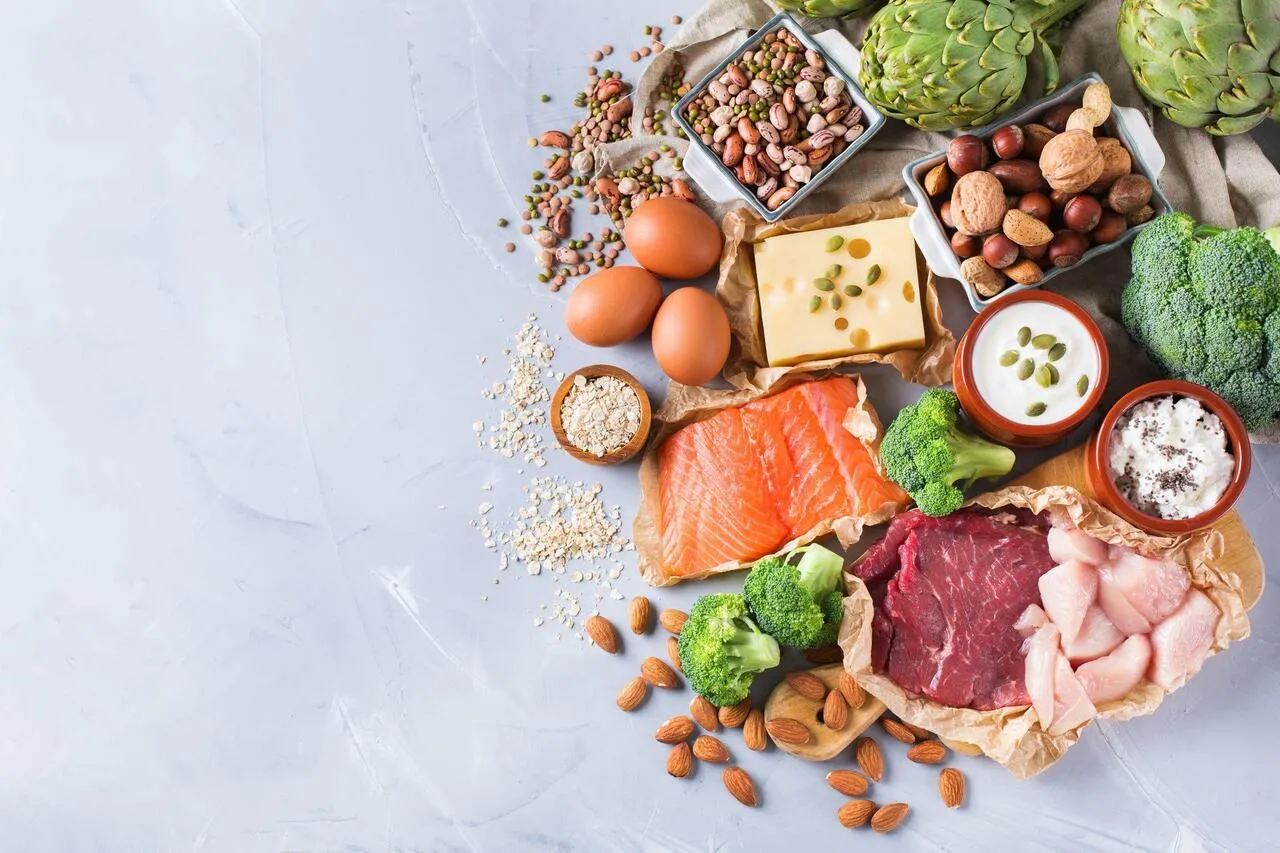
High-quality protein sources like dairy products, eggs, meat, fish, and certain supplements usually provide a favorable amino acid profile.
Plant-based protein sources can also significantly contribute to protein supply. In a predominantly plant-based diet, it may be beneficial to combine various protein sources and ensure overall sufficient protein intake.
Protein quality and the overall meal composition can influence how effectively consumed amino acids are utilized for protein synthesis. A 2023 review thus emphasizes that besides protein quantity, protein quality and the entire food matrix should also be considered.
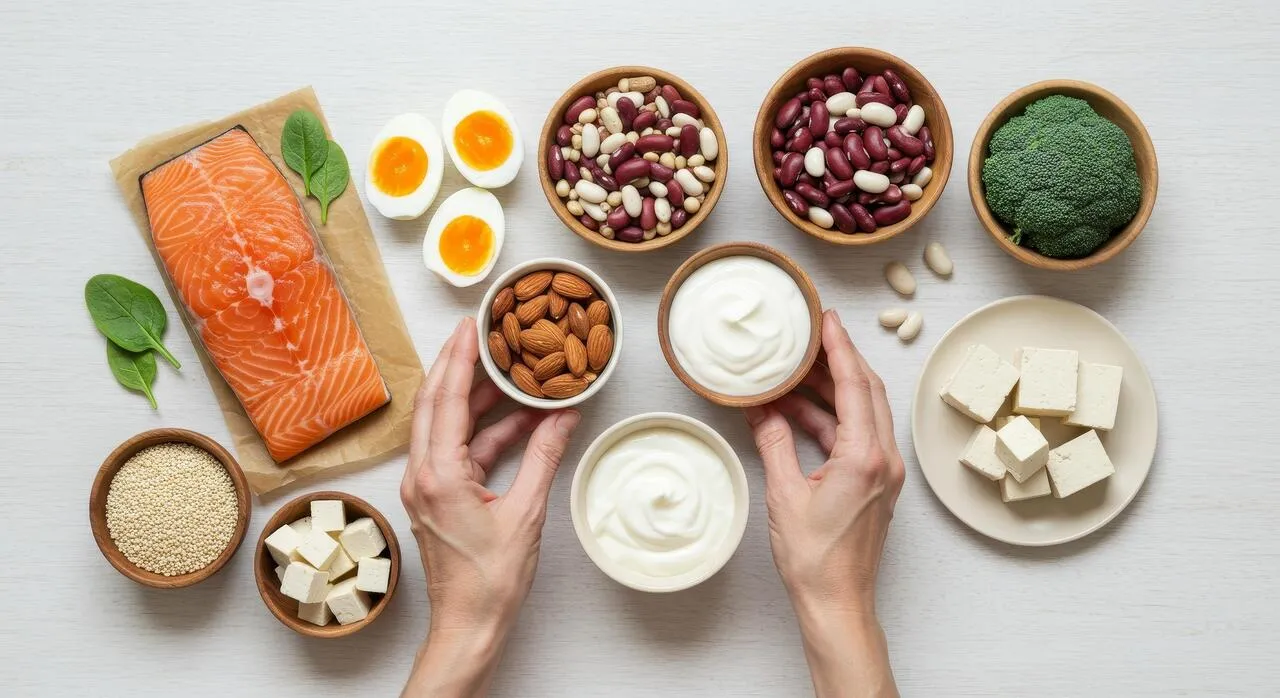
What does this mean for muscle building and fitness?
If you aim to build muscle, you don't have to try to optimize every meal for a magical protein amount.
What is far more important is a combination of:
sufficient total protein + regular strength training + adequate energy intake + recovery + sensibly distributed protein meals.
A practical guideline might be to distribute three to five protein-rich meals across the day.
For many, this results in approximately 25 to 40 grams of protein per meal. Larger or smaller amounts may also be practical depending on body weight, age, training status, protein source, and daily intake.

Key takeaways at a glance
| Statement | What does the research say? |
|---|---|
| The body can absorb only 30 g of protein | ❌ Incorrect |
| Anything over 30 g is useless | ❌ Overly simplified |
| 20–40 g can be sensible per meal for many | ✅ Practical guideline |
| Larger protein amounts can also be processed | ✅ Yes |
| Protein is not used exclusively for muscles | ✅ Correct |
| Overall daily intake is crucial | ✅ Very important |
| Protein should be distributed over multiple meals if possible | ✅ Sensible strategy |
| 100 g of protein at once is automatically better | ❌ Not deducible |
| Protein quality matters | ✅ Yes |
| The exact time post-training dictates muscle gain | ❌ Exaggerated myth |
So what is the optimal amount per meal?
There is no single perfect number.
As a practical guideline, approximately 0.25 to 0.4 g of protein per kilogram of body weight per meal can be used for physically active individuals.
For 60 kg, that's about 15–24 g.
For 75 kg, about 19–30 g.
For 90 kg, about 23–36 g.
For 100 kg, about 25–40 g.
These numbers, however, do not represent a hard biological limit. They serve to distribute daily protein intake sensibly across several meals.
If someone, for instance, consumes 50 grams of protein at a meal, they haven't automatically “wasted” 20 grams.
Conclusion
The body does not have a fixed upper limit of 30 grams of protein per meal.
The common claim that anything over 20, 30, or 40 grams of protein is useless confuses the maximum or optimal stimulation of muscle protein synthesis with actual absorption and use of protein in the body.
Protein is digested and amino acids are made available for numerous tasks. Some support muscle protein synthesis, while others are used for other tissues and body functions or, if needed, contribute to energy production.
Thus, when it comes to building muscle, it isn't crucial to hit a magical protein amount per meal. What is far more important are adequate daily protein intake, regular strength training, and sensible distribution of protein consumption throughout the day.
For many physically active individuals, approximately 0.25–0.4 g of protein per kilogram of body weight per meal is a practical guideline. However, this amount does not represent a rigid limit.
And precisely for this reason, the statement “The body cannot utilize more than 30 grams of protein” is not scientifically correct.
The better question is:
Not “How much protein can I absorb at once?” but “How can I sensibly align my daily protein intake with my body, my training, and my goal?”
Scientific Sources
- Schoenfeld BJ, Aragon AA. How much protein can the body use in a single meal for muscle-building? Implications for daily protein distribution. Journal of the International Society of Sports Nutrition. 2018.
- Morton RW et al. A systematic review, meta-analysis, and meta-regression of the effect of protein supplementation on resistance training-induced gains in muscle mass and strength in healthy adults. British Journal of Sports Medicine. 2018.
- Jäger R et al. International Society of Sports Nutrition Position Stand: protein and exercise. Journal of the International Society of Sports Nutrition.
- Kerksick CM et al. International society of sports nutrition position stand: nutrient timing. Journal of the International Society of Sports Nutrition.
- Trommelen J et al. The anabolic response to protein ingestion during recovery from exercise has no upper limit in magnitude and duration in vivo in humans. Cell Reports Medicine. 2023.
- Barnes TM et al. Protein quality and the food matrix: defining optimal versus maximal meal-based protein intakes for stimulating muscle protein synthesis. Applied Physiology, Nutrition, and Metabolism. 2023.
- Witard OC et al. The Muscle Protein Synthetic Response to Meal Ingestion Following Resistance-Type Exercise. Sports Medicine. 2019.