
Carbohydrates are regarded by many athletes as an essential energy source. Concurrently, low-carb diets gain immense popularity, especially among individuals targeting body fat reduction. But which nutritional approach truly benefits athletes? Are high carbohydrate intakes vital for muscle growth, or can a low-carb diet yield similar results?
The answer predominantly depends on the type of sport, training intensity, and individual goals.

What do Low Carb and High Carb Mean?
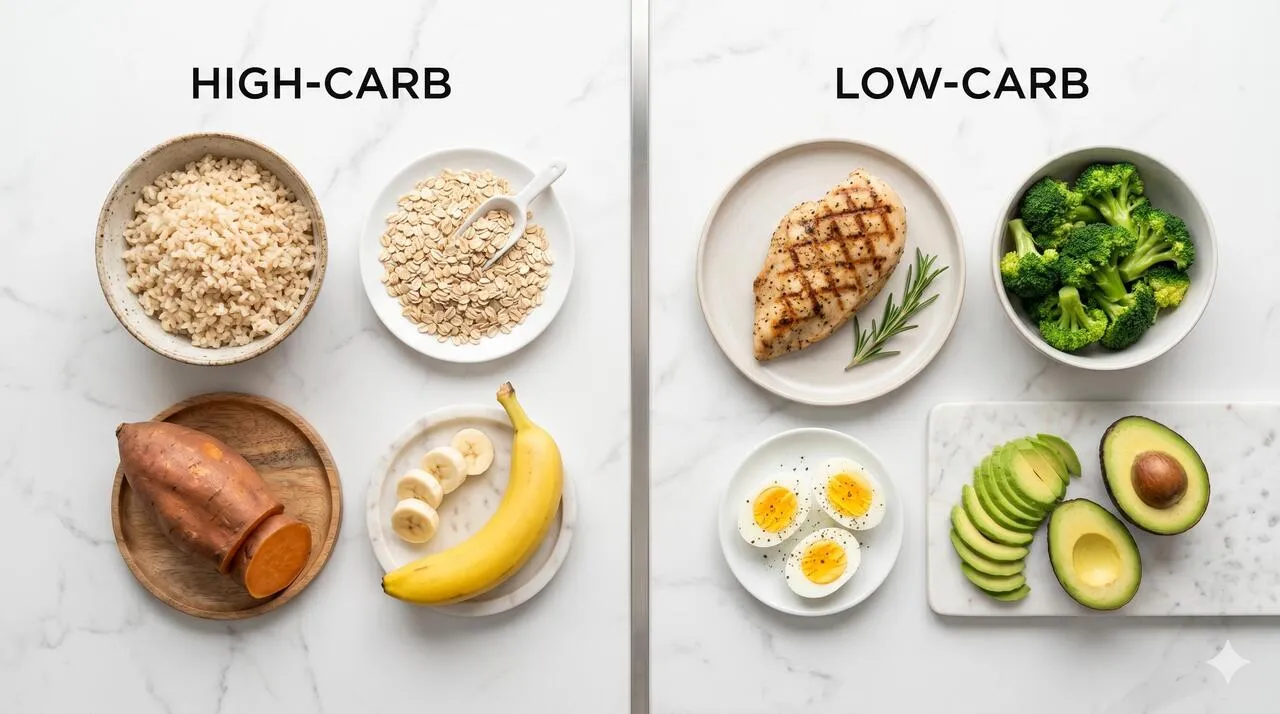
A low-carb diet reduces carbohydrate intake. Consequently, a larger portion of energy is derived from fats and often from protein-rich foods. Common foods include eggs, fish, meat, nuts, oils, and low-carb vegetables.
Conversely, a high-carb diet involves higher carbohydrate consumption. This includes oatmeal, rice, potatoes, whole grains, fruits, and legumes. This type of diet can particularly aid in replenishing muscle energy stores during intense training.
It is important to note that low carb and high carb are not uniformly defined nutritional approaches. The exact amount of carbohydrates can vary based on definition, energy requirements, and training goals.

Why Are Carbohydrates Crucial for Athletes?
The body stores carbohydrates in the form of glycogen in muscles and the liver. During intense activities, it accesses these reserves to quickly provide energy.
This is crucial in sprint training, intense strength training, interval workouts, and long endurance sessions. When glycogen stores are significantly depleted, maintaining high training intensity over extended periods can be challenging.
However, carbohydrates are not the sole energy source. At lower intensity levels, the body can derive a greater percentage of its energy from fats. A higher fat combustion during training does not automatically correlate with a greater long-term loss of body fat.

Low Carb: Advantages and Disadvantages
A low-carb diet might be beneficial for certain athletes. Those aiming to reduce body fat can better structure their diet and remain satiated longer with protein-rich foods. However, it is not automatically more effective than other dietary forms.
Possible Advantages:
- Can facilitate calorie intake control for some individuals.
- Allows sufficient protein intake if the diet is appropriately planned.
- Can be effective for specific training regimens, particularly those with moderate intensity.
Possible Disadvantages:
- Intense training sessions might feel more strenuous.
- Low carbohydrate availability can impair performance during frequent sprinting, interval, or high-volume strength training.
- Adapting to a very low-carb diet can initially result in fatigue and a decrease in performance.
A systematic review indicates that low carb does not offer reliable performance benefits for athletes. While strength capabilities may be maintained, endurance and anaerobic performance parameters can be affected.

High Carb: Advantages and Disadvantages
A high-carb diet may be particularly suitable for athletes who regularly engage in intense training or endurance sports. It aids in replenishing glycogen stores and ensuring energy supply during demanding training sessions.
Possible Advantages:
- Supports intensive and repeated exertions.
- Facilitates the replenishment of glycogen stores post-training.
- Can enhance performance in long endurance sessions and high training volumes.
Possible Disadvantages:
- A high carbohydrate intake can be associated with many calorie-dense, nutrient-poor products if poor food choices are made.
- Exceeding energy intake relative to expenditure can lead to body fat accumulation.
- A high carbohydrate proportion is not automatically superior if training volume is low.
Therefore, the key is not consuming as many carbohydrates as possible but adjusting the amount to the actual energy needs.

Low Carb vs. High Carb: A Direct Comparison
| Criterion | Low Carb | High Carb |
|---|---|---|
| Fat Loss | Can work if a calorie deficit is achieved | Can also work if a calorie deficit is achieved |
| Muscle Gain | Possible with sufficient energy and protein | Supports energy supply in high training volumes |
| Maximal Strength | Can often be maintained | May offer advantages in high training volumes |
| Sprint and Intervals | Performance may be impaired | Often better suited |
| Endurance Sports | Possible with some efforts, but not generally superior | Particularly advantageous in long or intense sessions |
| Daily Life and Preferences | Easier to adhere to for some individuals | Easier to adhere to for others |
The table illustrates: Neither nutritional approach is universally optimal for athletes. Particularly in intense and extended exertions, substantial evidence supports adequate carbohydrate supply.
What Is Better for Muscle Building and Fat Loss?
For Muscle Building, an appropriate training stimulus, adequate protein, sufficient total calories, and good recovery are crucial. Carbohydrates provide additional energy, which can be beneficial in high training volumes. A low-carb diet does not inherently inhibit muscle growth.
For Fat Loss, the long-term energy balance is primarily decisive. Consuming fewer calories than expended over time can reduce body fat. Low carb is a potential strategy but not a necessary component of a successful diet.
Food quality also plays a vital role. Vegetables, fruits, whole grains, quality protein sources, and healthy fats can support a balanced diet regardless of carbohydrate intake.

How Many Carbohydrates Do Athletes Need?
The requirement depends on training volume and intensity. Common guidelines in sports nutrition use the following ranges:
| Training Volume | Carbohydrates per kg Body Weight per Day |
|---|---|
| Low Intensity | approx. 3–5 g |
| Moderate Training | approx. 5–7 g |
| High Endurance Training Volume | approx. 6–10 g |
| Very High Intensity | approx. 8–12 g |
These values are general reference ranges and not mandatory prescriptions. For individuals with low training volume, lower intake may suffice. For very intensive or extended training sessions, the requirement might significantly increase.
Example: A person weighing 75 kg engaged in moderate training might aim for around 375–525 g of carbohydrates per day. Whether this range is practical depends on factors such as energy needs, training goals, and individual tolerance.

Which Diet Fits Which Sport?
For endurance athletes like runners, cyclists, and triathletes, adequate carbohydrate intake is crucial when covering long distances or performing intense sessions.
Strength athletes can progress with varying carbohydrate amounts. During short, moderate sessions, high intake is not mandatory. However, in high-volume and frequent intense sessions, carbohydrates can enhance training quality.
Those aiming primarily for fat loss should choose a dietary approach that enables a moderate calorie deficit, supplies enough protein, and can be sustained long-term.
A flexible approach is often beneficial: On intense training days, more carbohydrates are consumed, while rest days or low-intensity periods may require less.

Conclusion: Low Carb or High Carb – Which Is Better?
For most athletes regularly engaging in intense training, adequate carbohydrate supply offers advantages. It supports muscle energy stores and can enhance performance, particularly during endurance, interval training, and high-volume strength training sessions.
Conversely, Low Carb might appeal to individuals who can more easily manage calorie intake and reduce body fat with this diet. However, a general advantage for athletic performance is not scientifically proven.
Therefore, the best diet is not inherently Low Carb or High Carb. It should align with training goals, exertion levels, and personal lifestyle. Key considerations include adequate energy and protein intake, high-quality food, and a sustainable dietary approach.
Scientific Sources
- International Society of Sports Nutrition (2024): International society of sports nutrition position stand: ketogenic diets.
View scientific publication on PubMed - Systematic Review (2025): A Systematic Review of the Effects of Low-Carbohydrate Diet on Athletic Physical Performance Parameters.
View scientific publication on PubMed - Koerich et al. (2023): Effects of the ketogenic diet on performance and body composition in athletes and trained adults: A systematic review and Bayesian multivariate multilevel meta-analysis and meta-regression.
View scientific publication on PubMed - International Society of Sports Nutrition (2017): International society of sports nutrition position stand: diets and body composition.
View scientific publication in the Journal of the International Society of Sports Nutrition