What is 1RM (One-Rep Max) and How to Calculate It?
Are you looking to make your workout program more effective and maximize your performance? Then you should get familiar with the concept of 1RM, or One-Rep Max. 1RM represents the…
Read articleTraining

Anyone who regularly works out in the gym is familiar with this question: Should you load more weight onto the barbell or go for more repetitions with lighter weights?
Many athletes believe that heavy weights automatically guarantee larger muscles. Others prefer lighter weights with higher reps because they feel a stronger muscle stimulus and more intense burn.
But what does the science say? Is a heavy barbell truly superior, or can 15, 20, or even 30 reps lead to comparable muscle growth?
The answer is surprising: Both training methods can be effective. What matters is not just the amount of weight moved or the number of repetitions completed. More crucial are the training intensity, the training volume, the proximity to muscle failure, and the long-term increase in load.
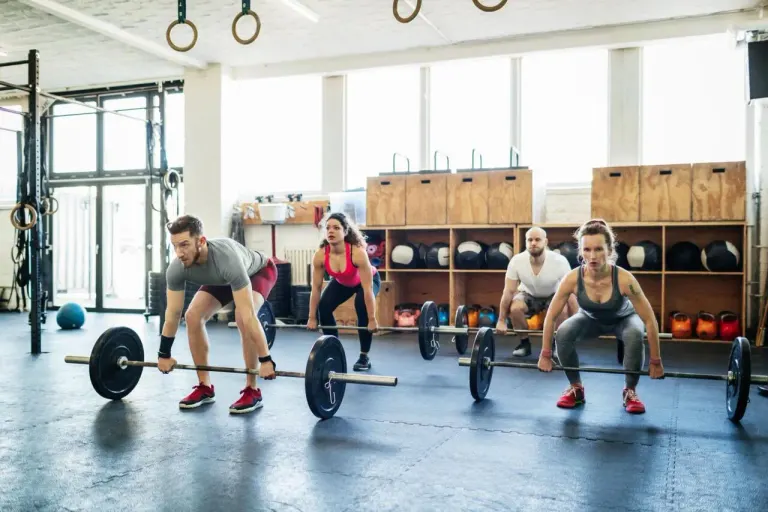
Muscle growth is referred to as muscle hypertrophy in sports science. It is the enlargement of muscle fibers as an adaptation to recurring training stress.
When we train with weights, our muscles must work against external resistance. This mechanical stimulus initiates adaptation processes that allow muscles to enlarge and become more efficient over time.
Mechanical tension plays a central role in this process. It arises when muscle fibers generate force under load.
However, this doesn't mean that only heavy weights can trigger an effective training stimulus. Lighter weights can also promote muscle growth, provided the sets are sufficiently challenging.
Besides training, recovery, adequate protein intake, energy supply, and sleep play vital roles.
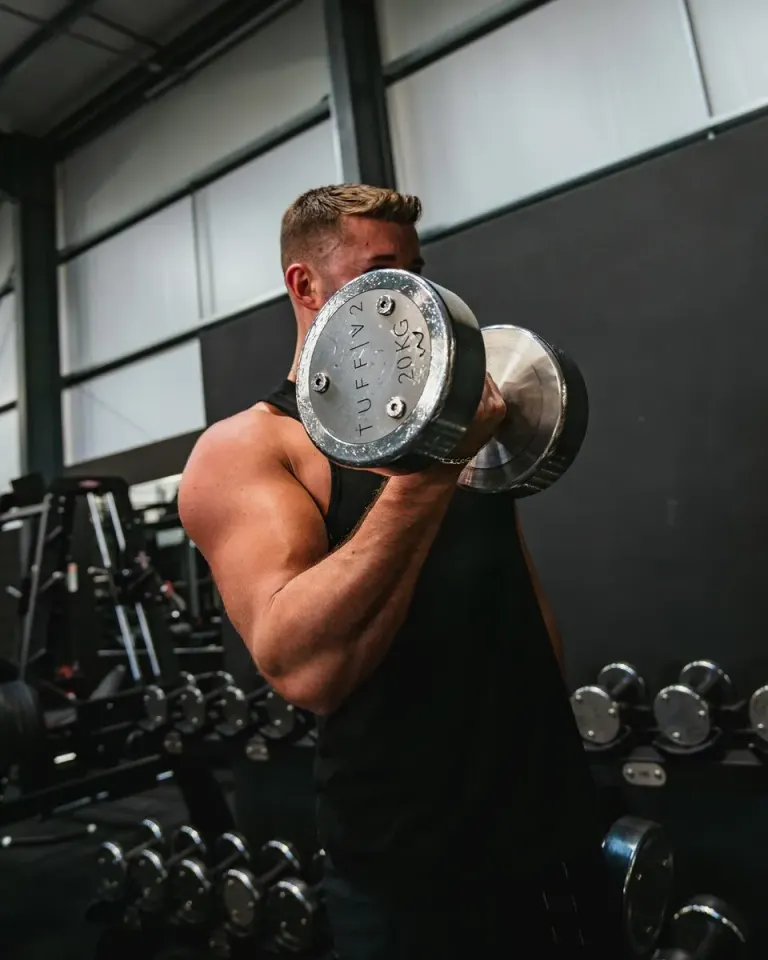
When training with heavy weights, athletes often work in a range of about 3 to 8 repetitions per set. The weight used is relatively high and imposes specific demands on strength development.
A significant advantage of this training style is the improvement of maximum strength. Those who regularly train with heavy loads improve their ability to lift heavy weights.
This is particularly interesting for strength athletes, powerlifters, and advanced practitioners.
Heavy weights can also be very effective for muscle building. They create high mechanical tension and allow for an intense training stimulus.
However, there are also drawbacks. Very heavy weights require clean technique, good movement control, and adequate rest between sets. Poor load management can diminish training quality.
Training heavier doesn't automatically mean training better.
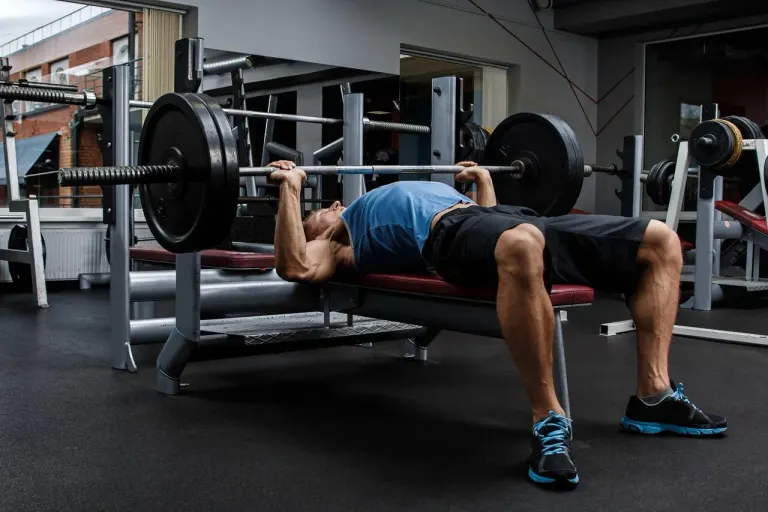
Another option is training with lighter weights and higher rep ranges. Here, many athletes work in the range of 12 to 20 or even 25 to 30 repetitions per set.
At first glance, this training form seems less effective, as the weight moved is significantly less.
Scientific studies, however, show that light and heavy weights can facilitate comparable muscle growth under appropriate training conditions.
What's particularly important is that the set is sufficiently strenuous. If one trains with a lighter weight and stops the set when numerous more repetitions could be performed, the training stimulus might not be adequate.
As fatigue increases, the muscle load intensifies, and even a lighter weight can provide an effective growth stimulus.
Another benefit: Lighter weights can be more comfortable for certain exercises and often allow for better movement control. This can be sensible, especially in isolation exercises like lateral raises, bicep curls, or tricep extensions.
However, very high rep numbers can also become strenuous. Local muscle fatigue and burning can lead one to end a set before the target muscles are adequately stimulated.

Recent scientific research has intensely explored this issue.
A particularly intriguing systematic review with meta-analysis was published in 2021 by Schoenfeld and other researchers.
They examined 45 studies comparing different training loads.
The result: Higher and lower weights led to comparable muscle growth. However, heavier weights had an advantage in maximum strength development. (PubMed)
Another large meta-analysis by Lopez and colleagues in 2023 analyzed 119 studies on muscle growth and 178 studies on strength development.
Here, it was also observed that different training methods could promote muscle growth. Heavier weights were especially advantageous for maximum strength. Different loading variants were effective for muscle hypertrophy. (bjsm.bmj.com+1)
Also noteworthy is the current position paper from the American College of Sports Medicine in 2026. It evaluates numerous systematic reviews and confirms that progressive strength training is crucial for muscle strength and mass development.
For muscle growth, the weekly training volume is of particular importance. Multiple work sets and appropriate load increases can help achieve better results. (PubMed+1)
This means: Exclusively training with heavy weights doesn't automatically give you an edge in muscle building over someone using lighter weights and higher reps.

A particularly significant factor in muscle growth is how close you train to muscle failure.
Muscle failure means you cannot perform another complete repetition with correct technique despite maximum effort.
However, not every set must be taken to absolute failure.
In training practice, Reps in Reserve (RIR) are often used. It refers to the number of additional repetitions that could theoretically be achieved at the end of a set.
Scroll sideways if needed to see all columns.
| RIR | Meaning |
|---|---|
| 0 RIR | No further repetitions possible |
| 1 RIR | One more repetition possible |
| 2 RIR | Two more repetitions possible |
| 3 RIR | Three more repetitions possible |
For many training situations, it is advisable to complete most work sets with approximately 1–3 repetitions in reserve.
On the other hand, if you do 20 reps with a light weight but could easily do another 10, you might not be training close enough to your limit.
It's also important that the technical execution doesn't suffer from the intensity. Muscle failure should not be confused with uncontrolled or sloppy repetitions.
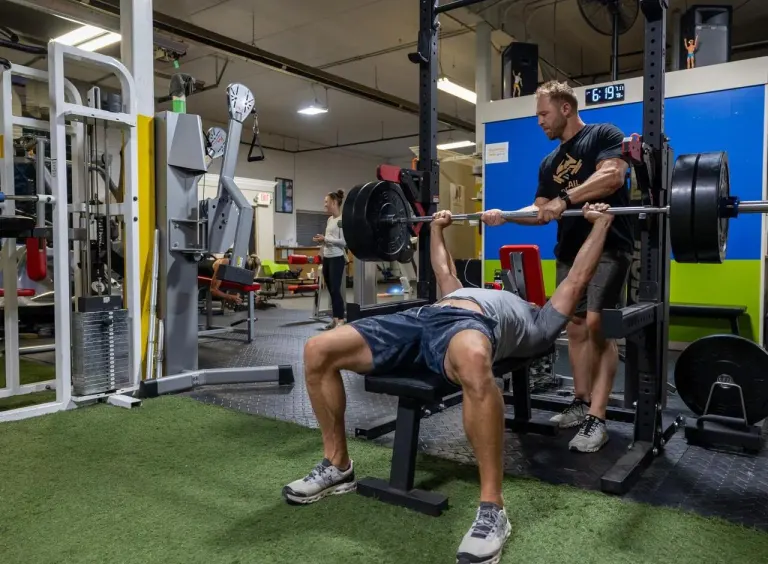
There isn't a single rep range that works optimally for every athlete and every exercise.
In practice, a combination of different rep ranges has proven effective.
Scroll sideways if needed to see all columns.
| Repetitions | Typical Use | Characteristic |
|---|---|---|
| 3–5 | Heavy strength training | High demands on maximum strength |
| 6–8 | Compound exercises | Heavy load and muscle building |
| 8–12 | Compound and isolation exercises | Practical training range |
| 12–20 | Isolation exercises | Great for controlled training |
| 20–30 | Light loads | Can also promote muscle growth |
These ranges are guidelines and not strict biological limits.
An athlete does not have to do exactly ten repetitions in every exercise to build muscle. More important are good technique, sufficient effort, and long-term effective training planning.

Why choose between heavy and lighter weights if both training methods have their benefits?
A combination can be particularly sensible.
Heavy weights are excellent for strength development and can be used in compound exercises like squats, bench presses, and deadlifts.
Lighter weights offer advantages in many isolation exercises. For example, lateral raises, bicep curls, or tricep extensions are often performed with higher rep counts and controlled movements.
An example of such a training setup:
Scroll sideways if needed to see all columns.
| Exercise | Repetitions | Training Goal |
|---|---|---|
| Squats | 6–8 | Strength and muscle building |
| Bench Press | 6–10 | Strength and muscle building |
| Seated Cable Row | 10–12 | Muscle building |
| Lateral Raises | 12–20 | Muscle building |
| Bicep Curls | 10–15 | Muscle building |
| Tricep Extensions | 12–20 | Muscle building |
The key is to align the load with the training goal and ensure it can be increased over an extended period.
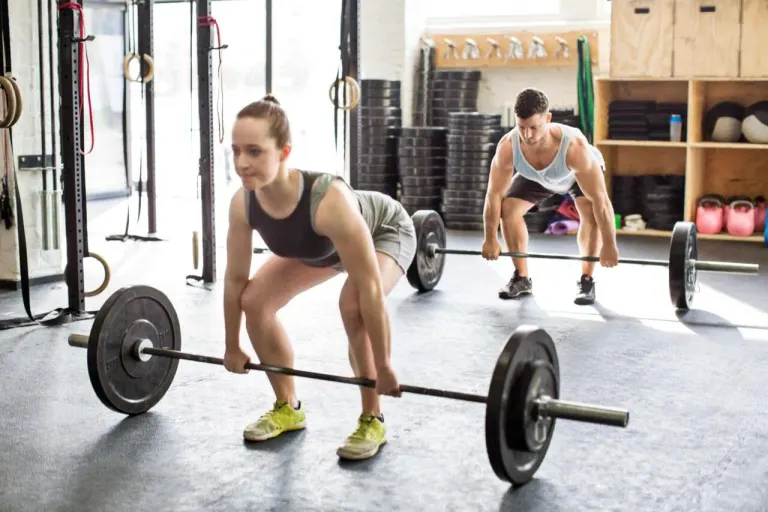
Regardless of whether you train with heavy or lighter weights, progressive overload plays a central role.
This means the gradual increase of training load.
If the body receives the same stimulus over a prolonged period, progress can slow down or stagnate.
An increase can be achieved in various ways:
A simple example:
You initially manage 8 repetitions of a 60 kg bench press. A few weeks later, you perform 10 or 11 clean reps with the same weight. That’s already an increase in your training performance.
Once you reliably reach the upper range of your planned rep range, consider moderately increasing the weight.
It’s not about egregiously training heavier at every session. The focus is on long-term development.
So what brings more muscle growth: more weight or more repetitions?
The scientific data indicates that both training methods can be very effective. Heavy training has particular advantages in developing maximum strength. For muscle building, both higher and lower weights can be utilized.
Critical factors include sufficient training intensity, an appropriate training volume, proximity to muscle failure, and continual load progression.
For most athletes, a combination of heavy compound exercises and lighter isolation exercises proves to be a sensible strategy.
If you aim to build muscle in the long term, you shouldn't just focus on the number on the barbell. What matters more is how consistently, controlled, and intelligently you train.
The best training method is ultimately the one that enables you to generate an adequate training stimulus, recover well, and achieve long-term progress.
Resistance Training Load Effects on Muscle Hypertrophy and Strength (2021)
Authors: Schoenfeld et al.
Published in the Journal of Sports Sciences.
A systematic review and meta-analysis including 45 studies. The research shows that higher and lower training weights can enable comparable muscle growth, while heavy weights have advantages in maximum strength.
Resistance Training Prescription for Muscle Strength and Hypertrophy in Healthy Adults (2023)
Authors: Lopez et al.
Published in the British Journal of Sports Medicine.
A large meta-analysis with 119 studies on muscle hypertrophy and 178 studies on strength development. It demonstrates that various training loads can promote muscle growth.
American College of Sports Medicine Position Stand: Resistance Training Prescription for Muscle Function, Hypertrophy, and Physical Performance in Healthy Adults (2026)
Authors: Currier et al.
Published in Medicine & Science in Sports & Exercise.
A contemporary scientific position paper that evaluates numerous reviews and summarizes recommendations for effective strength training, muscle growth, and training volume.
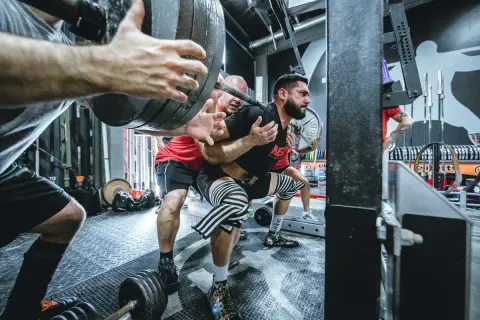
Are you looking to make your workout program more effective and maximize your performance? Then you should get familiar with the concept of 1RM, or One-Rep Max. 1RM represents the…
Read article
This blog provides a detailed analysis of the Heavy Duty training approach, including training plans, scientific studies, advantages and disadvantages, as well as concrete…
Read article
Sport is the cornerstone of a healthy lifestyle, signaling a fresh start for many. This blog post offers beginners step-by-step guidance, motivation sources, and success tips for…
Read article