
Back pain is among the most common everyday issues, particularly for individuals who sit a lot or train intensively. However, a crucial question arises: Should one even train when experiencing back pain? Or does this only lead to exacerbation?
The answer is nuanced—this is where "blind persistence" diverges from intelligent training.

When the Back Screams: Rest or Movement?
Many believe that complete rest is the best solution. Yet, often the opposite is true.
Light to moderate movement can:
- improve circulation
- relieve tension
- accelerate healing
BUT:
Not every pain is the same.
👉 You should NOT train when:
- sharp, stabbing pains occur
- pain radiates into the leg (typical in disc issues)
- numbness or tingling is present
👉 You can carefully train when:
- it's a matter of muscular tension
- the pain is light to moderate
- movement even improves the pain

Herniated Disc – Is Training Still Possible?
A herniated disc initially sounds like an absolute training ban. Yet:
In many cases, targeted training is actually part of the therapy.
What is important:
- no heavy axial loads (e.g., heavy squats)
- no jerking movements
- focus on stability and control
👉 The aim is not "train hard" but rather stabilize intelligently.

The Real Cause: A Weak Core
Most back problems do not occur suddenly—they develop over time.
Typical causes:
- weak core musculature
- sitting a lot
- poor posture
- imbalances (e.g., strong chest, weak back)
👉 Your back is only as strong as your core.

The Best Exercises for a Healthy Back
It's not about ego but about control.
1. McGill Big 3 – The Foundation for Stability
These exercises are considered the gold standard worldwide:
- Curl-Up (modified)
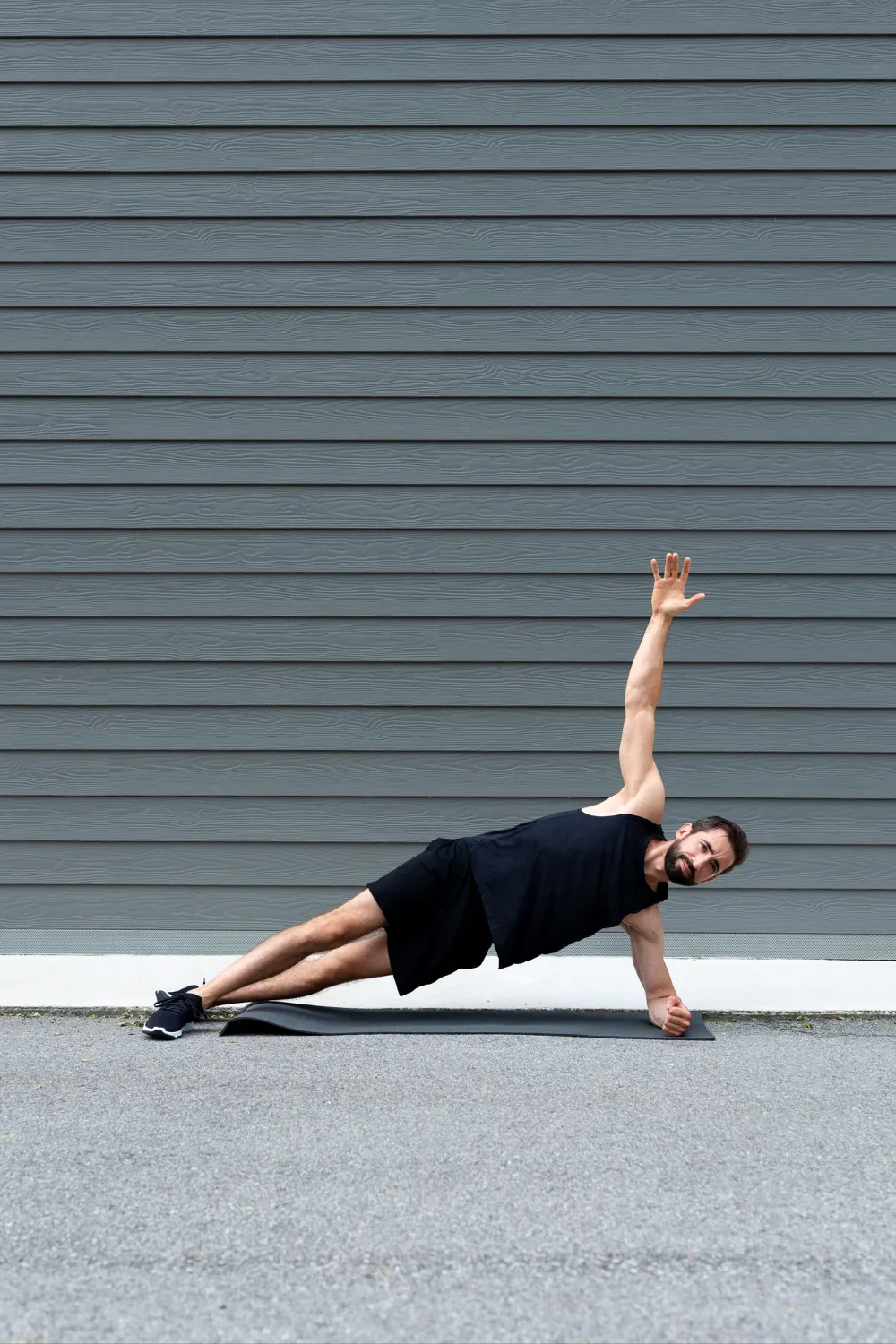
- Side Plank
- Bird Dog
👉 They train stability without unnecessarily stressing the spine.
2. Glute Bridge – Underestimated But Extremely Effective
Strong gluteal muscles significantly relieve the lower back.
→ 3 sets × 12–15 repetitions
→ Focus: slow execution
3. Face Pulls – Saving Posture
Perfect against rounded back and shoulder problems.
→ strengthens the upper back
→ visibly improves posture

4. Dead Bug – Core like a Shield
One of the best exercises for controlled core tension.
→ ideal for beginners & advanced
→ actively protects the spine
What You Should Absolutely Avoid
If you have back pain:
❌ Lifting heavy with poor technique
❌ Ego lifting
❌ Returning to old weights too soon
❌ Sit-ups with a rounded back (can stress discs)

Mobility: The Often Forgotten Key
A strong back alone is not enough—you also need flexibility.
Key areas:
- Hip
- Thoracic spine
- Hamstrings
👉 Good mobility = less stress on the lumbar spine
The Biggest Mistake: Ignoring Pain
Many train "through the pain"—and make everything worse.
The better strategy:
- Observe pain
- Adjust training
- Gradually increase progression
👉 Think long-term: A healthy back is more valuable than any personal record.

Mini Training Plan for the Back (2–3x per week)
| Exercise | Sets | Repetitions |
|---|---|---|
| Bird Dog | 3 | 10 per side |
| Side Plank | 3 | 20–30 sec |
| Glute Bridge | 3 | 12–15 |
| Face Pull | 3 | 12–15 |
| Dead Bug | 3 | 10–12 |
👉 Focus: clean technique, slow movement, no pain

Conclusion: Movement is Medicine – But Only in the Right Dose
Back pain doesn’t automatically mean a training ban.
On the contrary: The right training can resolve your back problem.
However:
- Quality > Weight
- Control > Intensity
- Patience > Ego
If you listen to your body and train purposefully, you can not only relieve your back from pain—but make it stronger than ever before.