Isolation exercises face an image problem in the fitness world. For some, they are indispensable for form, symmetry, and muscle awareness, while for others, they are a mere waste of time compared to squats, bench presses, and deadlifts. "Just do basic exercises" — almost everyone has heard this phrase.
But is the matter really so simple? Or are isolation exercises systematically underestimated?
It's time for a sober, scientifically grounded examination — without dogmas, but with clear statements.

What exactly are isolation exercises?
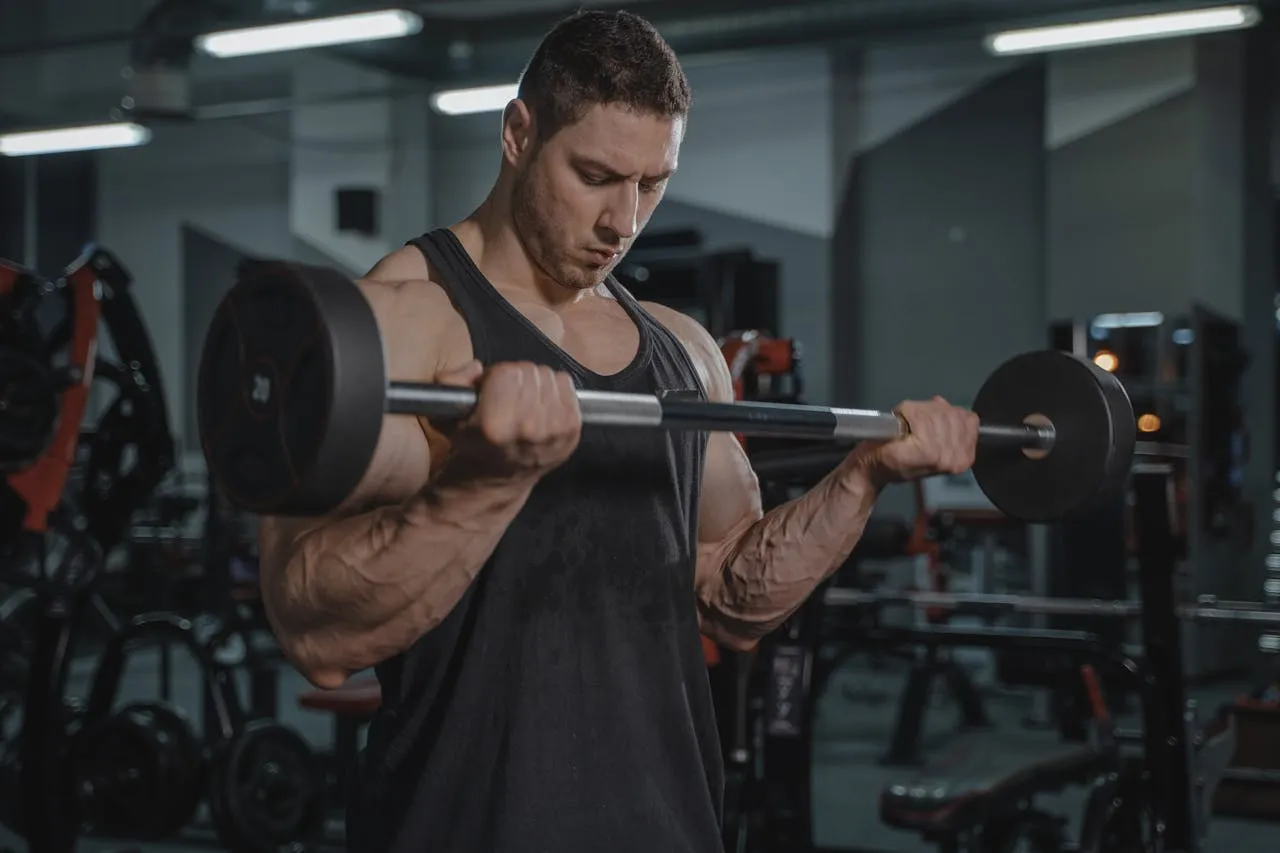
Isolation exercises are exercises where primarily a single joint is moved, thereby focusing on one muscle or muscle group. Classic examples include:
- Bicep curls
- Leg extensions
- Leg curls
- Lateral raises
- Tricep pushdowns
- Cable flys
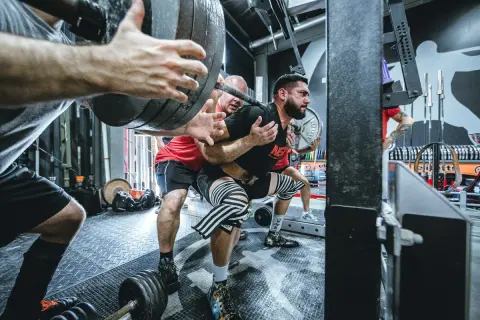
In contrast to this, there are compound exercises like squats or bench presses, where multiple muscle groups work simultaneously.
Important: No exercise isolates a muscle 100%. Even in isolation exercises, synergists work together — the difference lies in the relative share of the target musculature.

The big accusation: "Isolation exercises do not lead to muscle growth"
This argument persists stubbornly but is scientifically untenable.
Studies clearly show: Muscle hypertrophy is primarily triggered by mechanical tension, metabolic stress, and progressive overload — not by the number of joints involved.
Isolation exercises can:
- generate high mechanical tension on a specific muscle
- bring the target muscle close to muscle failure
- increase metabolic stress intentionally
Several review studies confirm that muscle growth is effectively possible through isolation exercises if volume and intensity are right (Schoenfeld et al.).

Why basic exercises alone are often not sufficient
Basic exercises are excellent, but not perfect.
For complex compound movements, the rule is:
The weakest muscle limits the movement.
An example:
During the bench press, the triceps or the front shoulder often fail before the chest is fully exhausted.
The result: The chest does not always receive the maximum growth stimulus.
Isolation exercises address this very issue:
- they bypass limiting muscle groups
- they allow targeted exhaustion of the target muscle
- they improve the "mind-muscle connection"
This becomes particularly relevant for advanced trainees.

Isolation exercises and muscle balance
An underestimated point is injury prevention.
Muscle imbalances often occur when:
- large muscles dominate
- small, stabilizing muscles are neglected
Typical examples:
- weak rear deltoids → shoulder problems
- underdeveloped hamstrings → knee issues
- weak gluteus medius → hip instability
Targeted isolation exercises help to address these deficits — something basic exercises alone often cannot achieve.

Scientific comparison: Basic exercises vs. isolation exercises
| Criterion | Basic Exercises | Isolation Exercises |
|---|---|---|
| Muscle growth | very high | high |
| Strength increase | very high | moderate |
| Target muscle focus | limited | very high |
| Time efficiency | high | lower |
| Injury risk when fatigued | higher | lower |
| Suitability for beginners | very good | good |
| Suitability for advanced trainees | good | very good |
Research shows: The combination of both training methods is superior to isolated use.

For whom are isolation exercises particularly useful?
Isolation exercises yield their greatest benefits for:
- Advanced trainees with stagnating muscle growth
- targeted correction of weaknesses
- rehabilitation and prevention phases
- aesthetically oriented training (bodybuilding)
- training plans with limited volume per muscle
Beginners also benefit — however, to a moderate extent and not as a replacement, but as a supplement.

The myth of the "unnecessary exercise"
The statement "Isolation exercises are unnecessary" is often a sign of:
- over-simplified training mentality
- focus on strength over hypertrophy
- lack of differentiation by training goals
Powerlifters, weightlifters, and athletes have different priorities than those who wish to build, shape, and train muscles healthily.
Training is goal-dependent, not ideological.
Conclusion: Underestimated — not unnecessary
Isolation exercises are not a replacement for basic exercises — but they are equally not a waste of time.
They are a precise tool, which is particularly effective when strategically deployed.
Those who wish not just to move muscles, but to develop them specifically cannot overlook isolation exercises.
Not out of ego. Not out of convenience.
But out of training intelligence.