
Ramadan extends beyond mere abstinence from food and drink. It demands mental discipline, self-control, and structure – qualities that are also fundamental in sports. Nevertheless, each year many face the same questions:
Should one train during Ramadan? When is the ideal time? And how should the diet be structured to preserve muscle mass and remain efficient?
The good news: Training during Ramadan is possible – and can even be advantageous if done thoughtfully.

What happens in the body during Ramadan?
During the fasting period, one abstains from food and fluid intake from sunrise to sunset. This leads to certain physical changes:
- Insulin levels remain low for extended periods
- The body increasingly utilizes fat reserves
- Glycogen stores are more limited
- There is a lack of fluid for several hours
- Regeneration can be slower if the diet is not well-planned
This does not mean that training is harmful – it merely requires a smarter approach.

Should one train at all during Ramadan?
The short answer: Yes – but adjusted.
Training during Ramadan supports:
- the maintenance of muscle mass
- the preservation of strength
- the sustaining of metabolism
- the promotion of mental strength
- the retention of structure in everyday life
❌ Not advisable are:
- daily high-volume workouts
- extreme cardio sessions
- training for many hours without subsequent food intake
The goal during Ramadan is maintenance – not maximum performance.

The best time for training during Ramadan
The timing of workouts is crucial for performance and recovery.
After Iftar (recommended for most)
The classic – and for many the best option.
Benefits:
- Prior fluid intake possible
- Energy intake can occur
- Recovery begins immediately after exercise
Ideal timing:
- 60–90 minutes after Iftar
- light meal before exercise
- full meal thereafter

Shortly before Iftar (for experienced individuals only)
Training is done in a fasted state, and food is consumed immediately after.
Benefits:
- Active fat metabolism
- Time savings
Drawbacks:
- Lower performance capability
- Risk of dehydration
- Unsuitable for intensive strength sessions
During the day (mostly not recommended)
Training without food and water increases:
- The risk of injury
- Cortisol levels
- Fatigue

What should training during Ramadan look like?
Recommended:
- 2–4 sessions per week
- 45–60 minutes per session
- Focus on basic exercises
- Moderate training volume
- No excessive training
Suitable:
- Strength training
- Light machine workouts
- Moderate bodyweight exercises
- Short walks
❌ Less suitable:
- High-intensity interval training (HIIT)
- Long runs
- Very high rep counts
- Training to complete muscle failure

Nutrition during Ramadan – the key to success
Without the right nutrition, training during Ramadan is of little benefit. Iftar and Suhoor are crucial.
Iftar – Proper breaking of the fast
Immediately after fasting:
- Water
- 1–2 dates
- Light soup
Then:
- Protein source
- Complex carbohydrates
- Some fats
Suhoor – The most important meal
Suhoor influences how you feel during the day.
Particularly important:
- Ample protein
- Fiber-rich carbohydrates
- Healthy fats
- Adequate salt and fluid intake
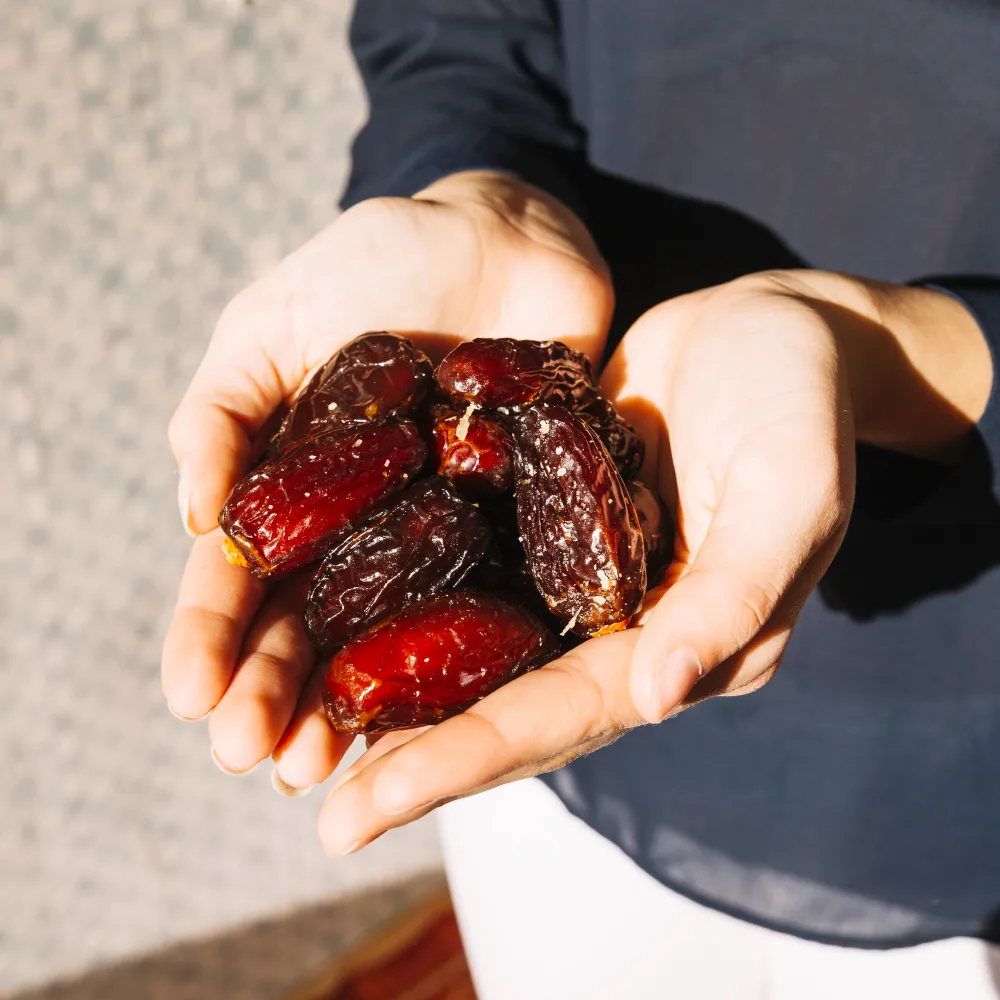
Exemplary diet during Ramadan
| Meal | Focus | Examples |
|---|---|---|
| Iftar (Start) | Fluid & quick energy | Water, dates, soup |
| Main Iftar | Recovery & satiation | Rice, potatoes, chicken/fish, vegetables |
| Post-workout snack | Protein | Yogurt, eggs, shake |
| Suhoor | Slow energy | Oatmeal, eggs, nuts, fruit |
Protein, water & regeneration
Protein
- Aim for about 1.6–2.2 g per kg body weight
- Essential for muscle maintenance
- Distribution across multiple meals
Fluid
- Regular fluid intake between Iftar and Suhoor
- Do not drink all at once
- Electrolytes can be supportive
Sleep
- Short nights are normal
- Power naps are beneficial
- Recovery is part of training

Mental strength: Viewing Ramadan as an advantage
Ramadan is not a setback – it is a mental boot camp.
You learn:
- Discipline
- Abstinence
- Structure
- Gratitude
Those who train during Ramadan do not only train their muscles – but their character.

Conclusion: Ramadan & fitness go together
Ramadan does not mean the suspension of training. It means adaptation.
With the right timing, reduced volume, and smart nutrition, you can:
- maintain muscles
- lose fat
- remain efficient
- become mentally stronger
Not every day will be perfect – and that's okay. Consistency beats perfection.