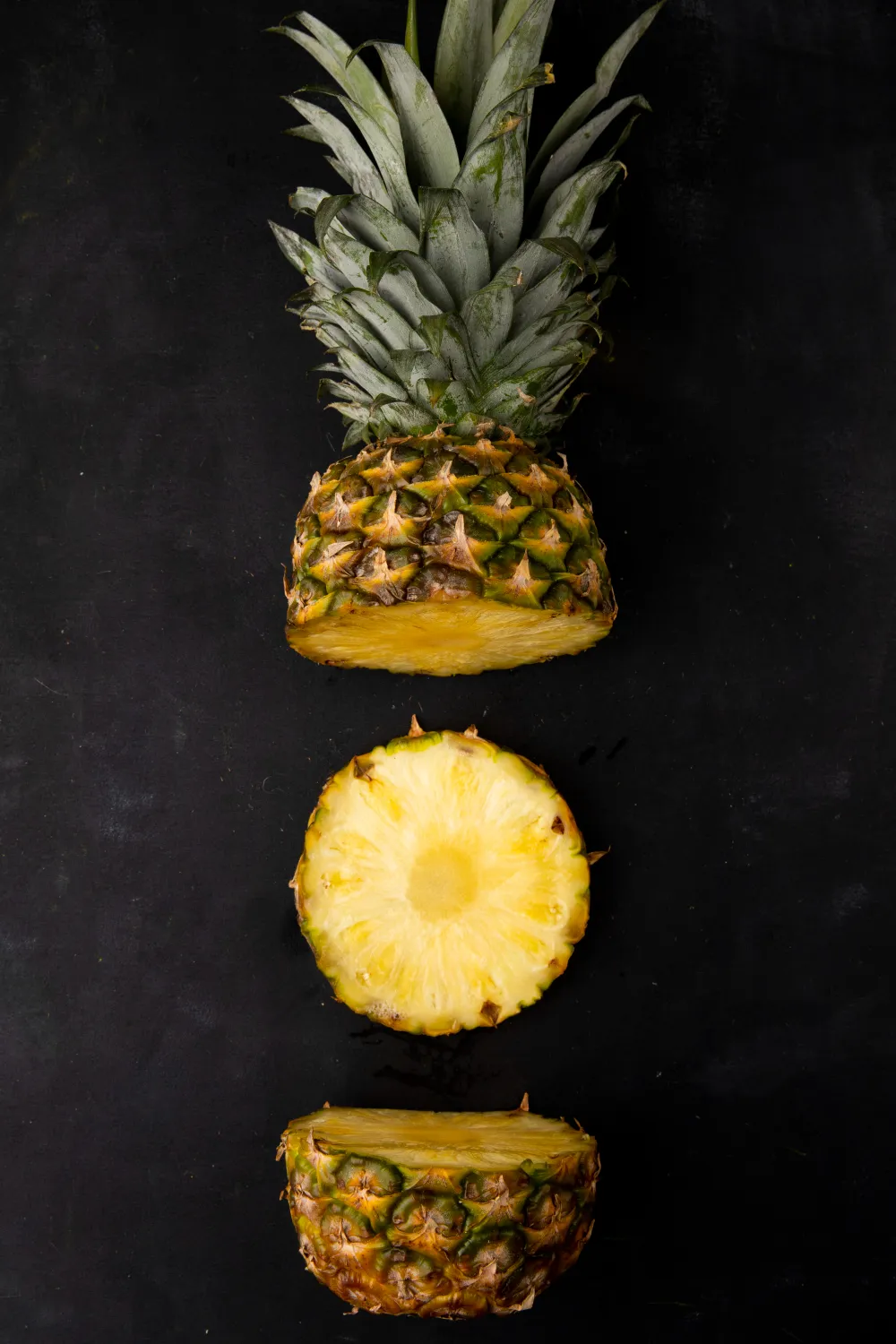
Juicy, exotic, refreshing – pineapple is among the most popular tropical fruits worldwide. Yet beneath its sweet and tart flavor lies much more than just a low-calorie snack. The tropical fruit (Ananas comosus) not only supplies significant amounts of Vitamin C and manganese but also contains the unique enzyme bromelain, which has been intensively studied by scientists for decades.
Anyone who knows pineapple only as a fruit salad ingredient severely underestimates its potential.
Nutritional Profile of Fresh Pineapple (per 100 g)
| Nutrient | Amount | Importance for the Body |
|---|---|---|
| Energy | 50 kcal | Low-calorie, diet-friendly |
| Carbohydrates | 13 g | Quick energy source |
| Sugars | 9.9 g | Natural fructose & glucose |
| Fiber | 1.4 g | Aids digestive function |
| Vitamin C | 47.8 mg | Antioxidative cell protection |
| Manganese | 0.9 mg | Bone metabolism & enzyme activity |
| Potassium | 109 mg | Electrolyte and fluid balance |
| Bromelain | variable | Proteolytic enzyme |
Source: USDA FoodData Central

Antioxidant Protection with Vitamin C
With nearly 50 mg of Vitamin C per 100 g, pineapple already covers more than half of an adult's daily requirement. Vitamin C acts as a powerful antioxidant and protects cells from oxidative stress – a mechanism associated with aging processes and chronic diseases.
A meta-analysis in the journal Nutrients (Hemilä & Chalker, 2017) showed that adequate Vitamin C intake can significantly shorten the duration of cold symptoms. Additionally, Vitamin C is essential for:
- Collagen formation (skin, tendons, vessels)
- Iron absorption in the intestine
- Immune cell function
- Wound healing processes
Regular, moderate consumption of pineapple can therefore meaningfully contribute to immune support.
Bromelain – The Enzyme with Special Research Interest
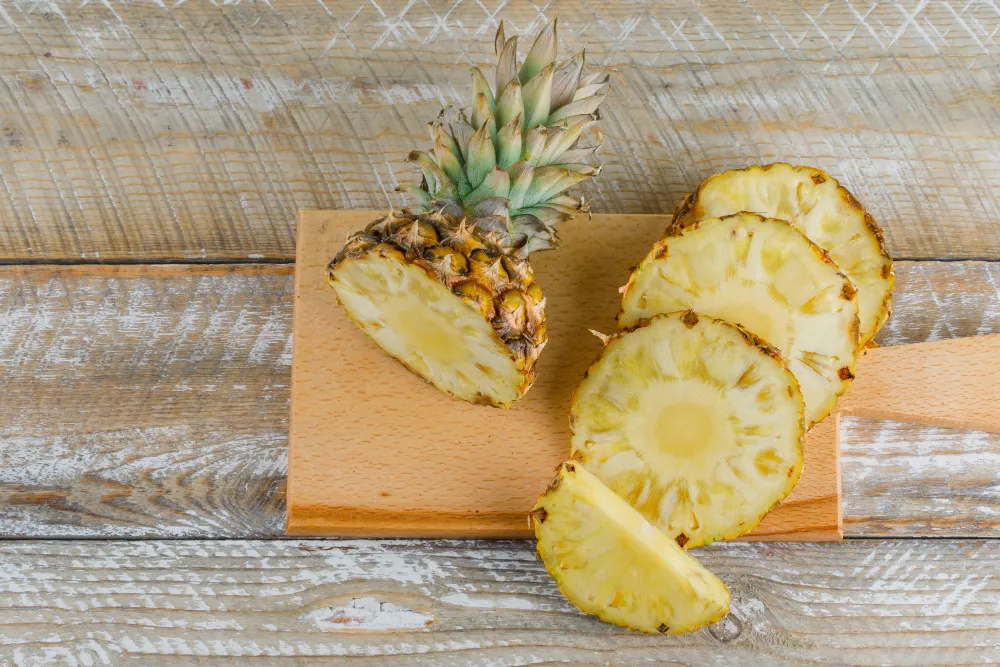
The enzyme complex bromelain, found in pineapple, consists of proteolytic (protein-digesting) enzymes. It is particularly concentrated in the core but is also present in the fruit's flesh.
Certain areas of interest in scientific research include:
Anti-inflammatory Properties
Bromelain influences inflammatory mediators such as prostaglandins and cytokines.
A systematic review (Brien et al., 2004, Evidence-Based Complementary and Alternative Medicine) examined its use in osteoarthritis and found that bromelain can have effects comparable to certain nonsteroidal anti-inflammatory drugs, albeit with fewer side effects.
Support of Recovery in Sports
Studies in the Journal of Sports Science & Medicine suggest that enzyme combinations with bromelain may reduce muscle soreness and shorten recovery time after intense exertion.
For physically active individuals, pineapple can thus be an interesting addition to a recovery-oriented diet.
Contribution to Protein Digestion
Bromelain can break down proteins into smaller peptides and amino acids. This explains why pineapple can tenderize meat – it "pre-digests" it enzymatically.
A publication in Biotechnology Research International describes the high proteolytic activity of bromelain and discusses potential applications in digestive issues. However, it is worth noting that the concentration in fresh pineapple is significantly lower than in isolated dietary supplements.

Manganese – The Often Underrated Mineral
Pineapple is one of the richest sources of manganese among fruits. Just 100 g supplies nearly half of the daily requirement.
Manganese is essential for:
- Activation of numerous enzymes
- Energy metabolism
- Formation of bone tissue
- Antioxidant protection systems (superoxide dismutase)
A deficiency is rare but can impair bone metabolism and antioxidant capacity over time.
Gut Health and Secondary Plant Compounds
In addition to fibers, pineapple contains various polyphenols and organic acids. These can positively affect the gut flora and have antioxidative effects.
Fibers stimulate intestinal movement and support a healthy microbiota. Although pineapple is not a "fiber miracle," it still contributes to daily intake.

Possible Side Effects and Precautions
Despite its many benefits, pineapple is not a miracle cure.
High amounts may irritate the mucous membranes of the mouth due to the fruit acid:
- Cause mouth irritation
- promote heartburn in sensitive individuals
Bromelain in high doses may affect blood clotting. Individuals taking anticoagulants should consult a doctor before consuming large quantities or supplements.
People with a latex allergy may also develop cross-reactions to tropical fruits like pineapple.

Fresh or Canned?
Fresh pineapple contains active enzymes.
In canned pineapple, the enzyme is largely inactivated through heating. Moreover, it is often stored in sugary syrup, significantly increasing calorie content.
For maximum health benefits, fresh, ripe pineapple is the better choice.
Conclusion
Pineapple is much more than a sweet tropical fruit. It provides substantial amounts of Vitamin C and manganese, contains antioxidative phytocompounds, and the scientifically extensively studied enzyme bromelain. Studies suggest anti-inflammatory, recovery-promoting, and potentially digestive-supportive effects.
Those who regularly and moderately incorporate pineapple into a balanced diet benefit from a combination of flavor, nutrient density, and functional properties – without exotic superfood myths but with a solid scientific foundation.