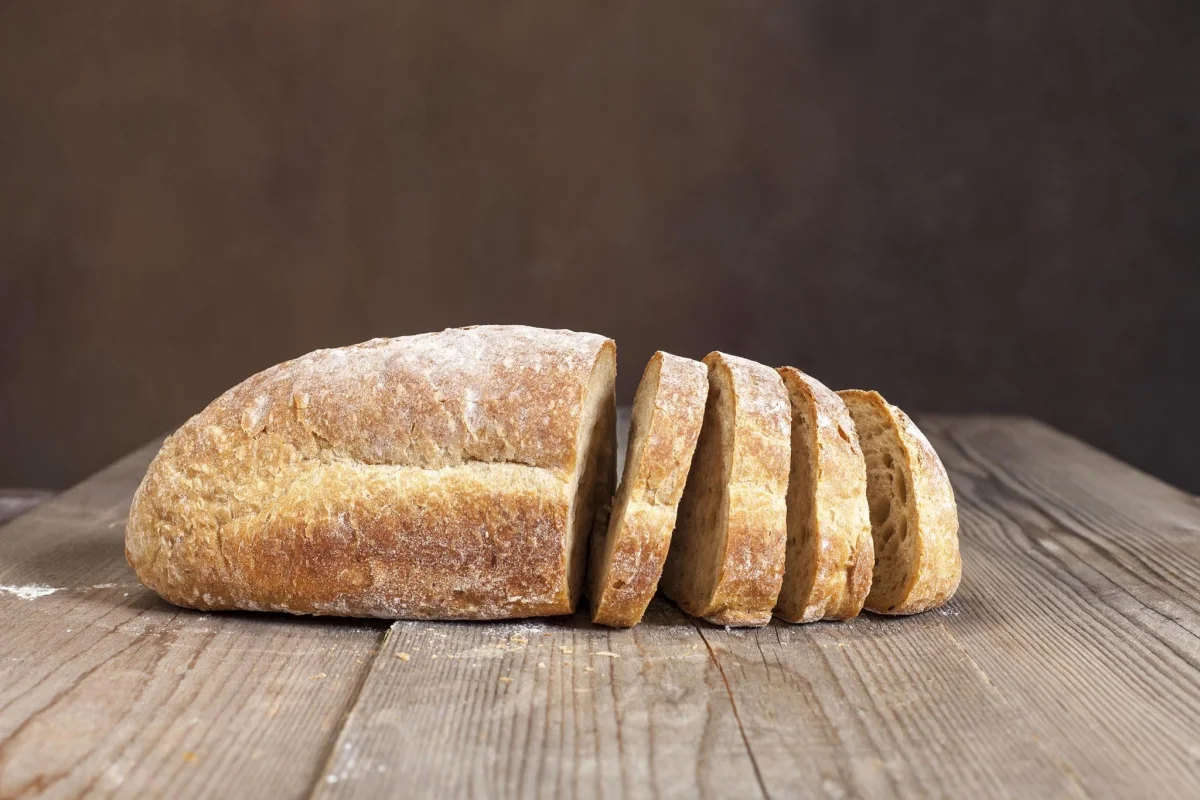
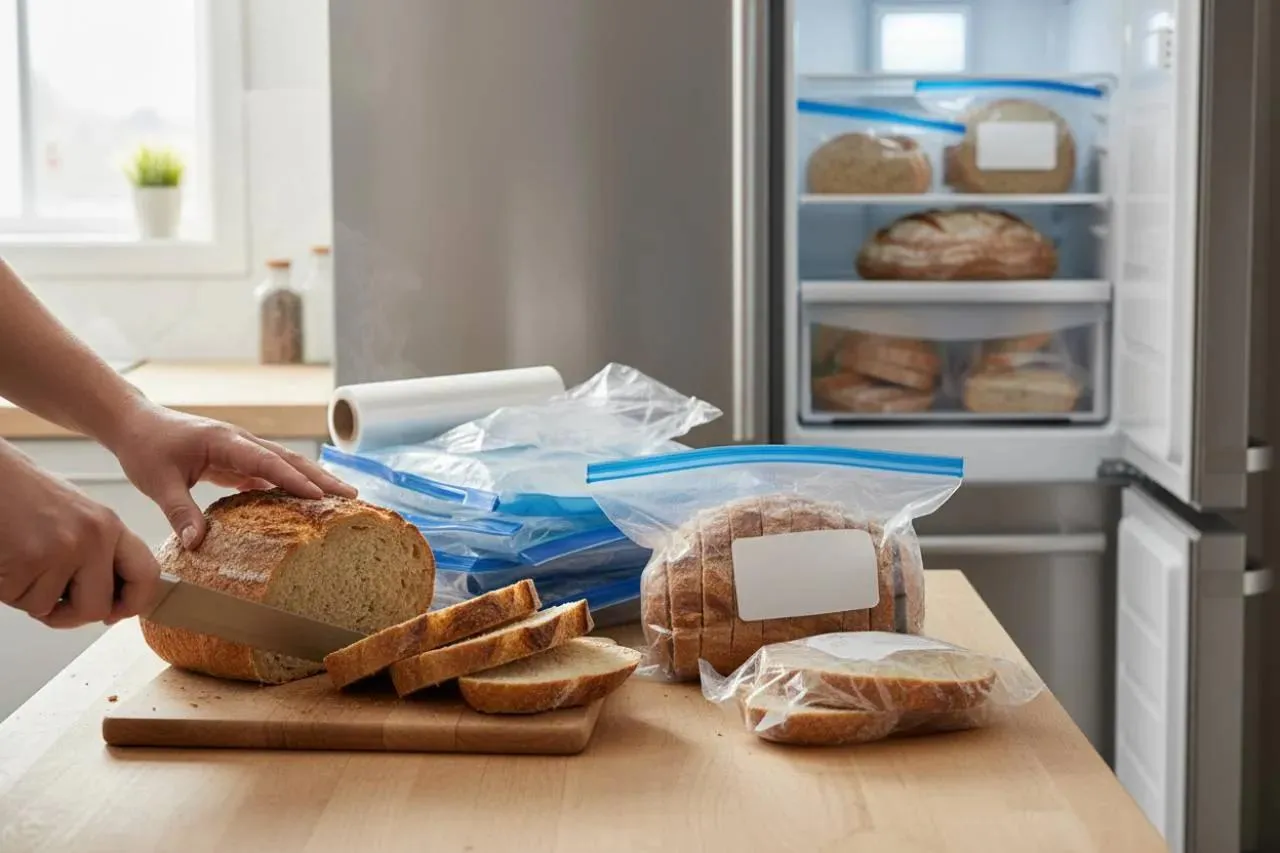
Freezing bread is particularly practical in everyday life: It extends shelf life, reduces food waste, and allows bread to be stored in portions.
However, from a nutritional science perspective, something interesting happens when bread cools and is stored. The starch in bread changes its structure. This process is known as retrogradation.
This is particularly interesting for the sports and fitness world because it can change the rate at which carbohydrates from bread are digested and absorbed into the blood as glucose.
However, it's important to note: Frozen bread is not automatically a “healthier” bread. The composition of the bread, cooling, storage duration, thawing, and toasting all play a role.
What happens to starch during baking?
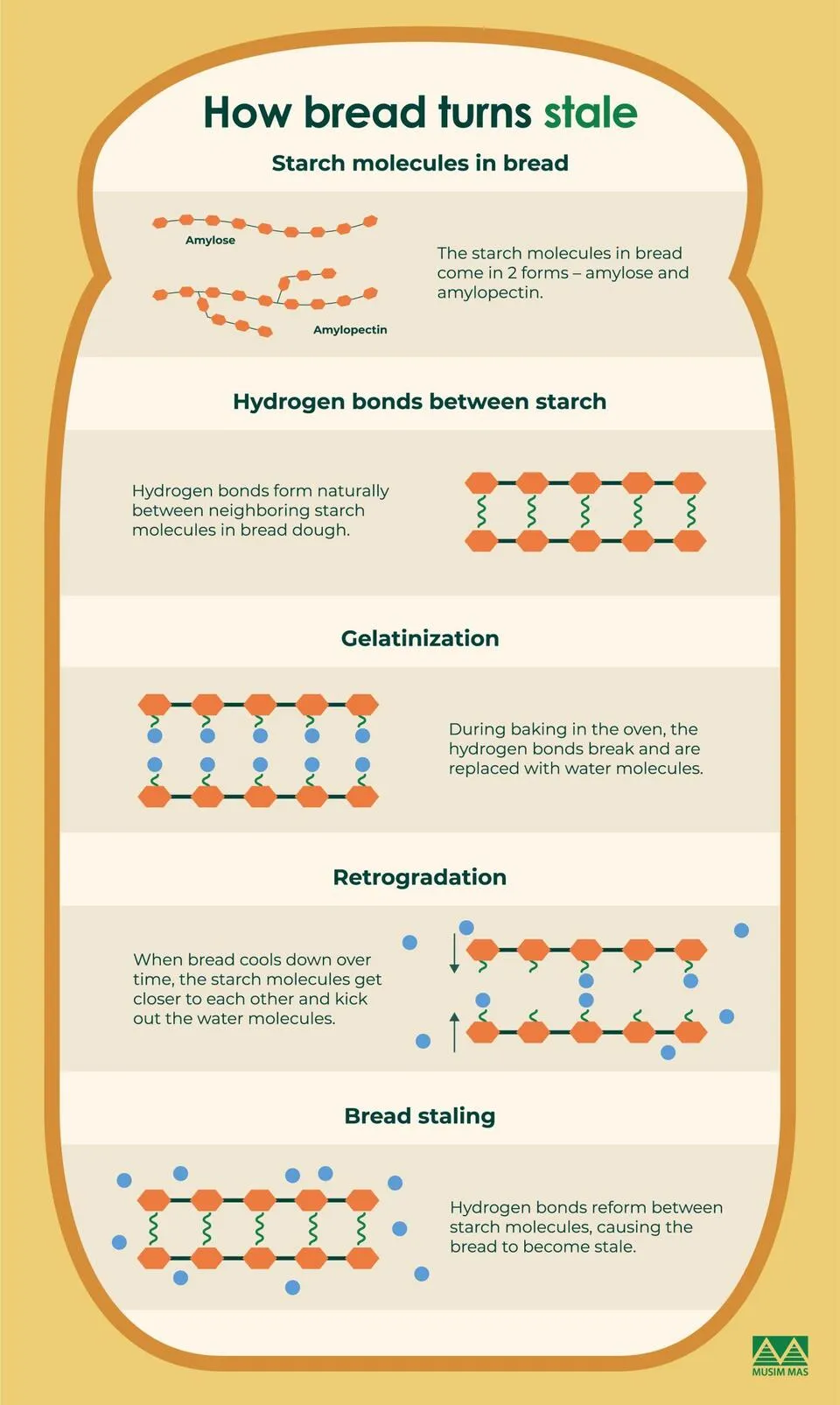
Bread contains large amounts of starch. The two main components are amylose and amylopectin.
During baking, starch encounters water and high temperatures. The starch granules absorb water, swell, and partially lose their original structure. This process is called gelatinization. This makes the starch more accessible to digestive enzymes.
This is precisely why freshly baked white bread can be digested relatively quickly and lead to a noticeable rise in blood glucose.
However, the opposite occurs during subsequent cooling: Parts of the starch molecules start to reorder themselves.

What does retrogradation mean?
Retrogradation describes the reordering of amylose and amylopectin after heating and subsequent cooling.
The process can be simplified as follows:
Baking → Starch swells and breaks down → Cooling → Starch molecules reorder → Retrogradation
Amylose can rearrange relatively quickly. Amylopectin changes more slowly and plays an important role in the aging and hardening of bread. The retrogradation of starch is also one of the reasons why bread becomes drier and firmer over time.
For nutrition, it is particularly interesting that some retrograded starch is less easily broken down by digestive enzymes.
Resistant starch – the interesting part for nutrition
Part of the starch formed through retrogradation can be classified as resistant starch type 3 (RS3).
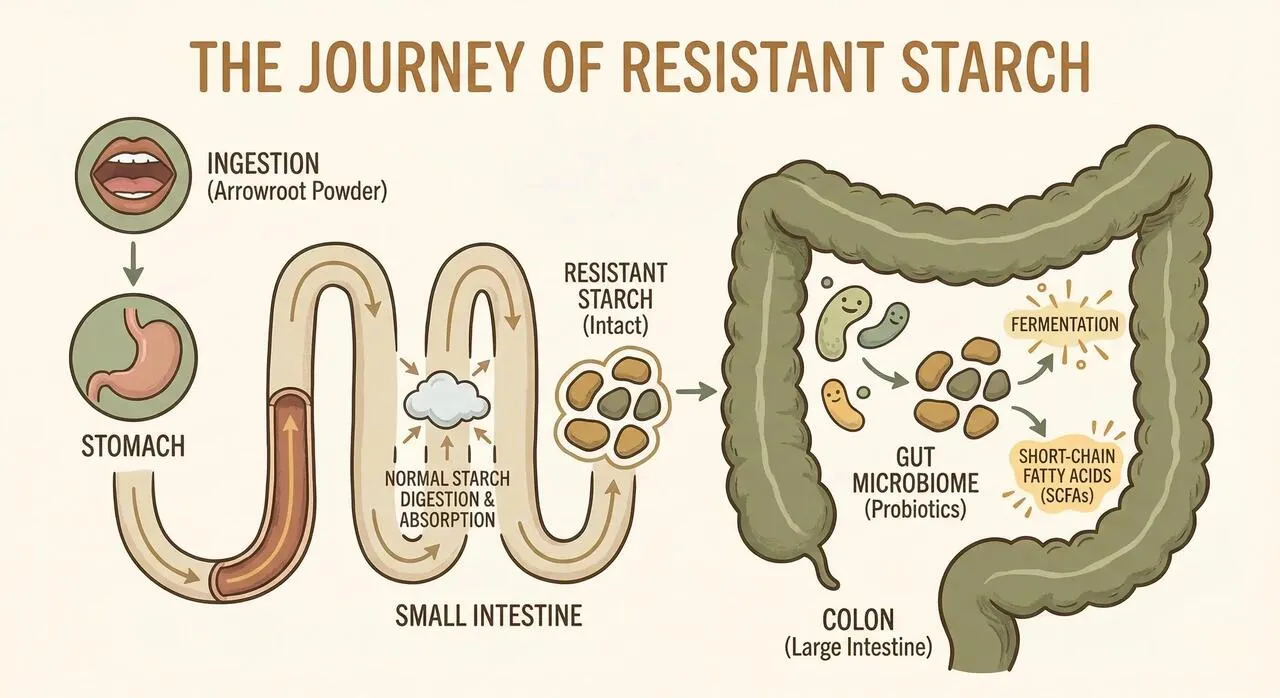
Resistant starch is not fully digested in the small intestine. This means it is not as quickly available as glucose as easily digestible starch. Part of it reaches the colon, where it can be fermented by gut bacteria.
This doesn't mean that carbohydrates from bread suddenly "disappear." Rather, their digestibility and rate of digestion may change partially.
This can be especially interesting when considering how bread affects blood sugar after a meal.
What does freezing have to do with it?
This is where it gets particularly exciting.
Freezing significantly cools down the bread. During freezing and the subsequent storage, the distribution of water and the structure of the bread components change.
Freezing can also influence the processes occurring after baking during cooling and storage. Studies on bread and starch show that processing and storage conditions can affect the structure of starch and, consequently, its digestion.
A particularly interesting human study examined precisely what happens when white bread is frozen and then thawed.
What does research say about frozen bread?
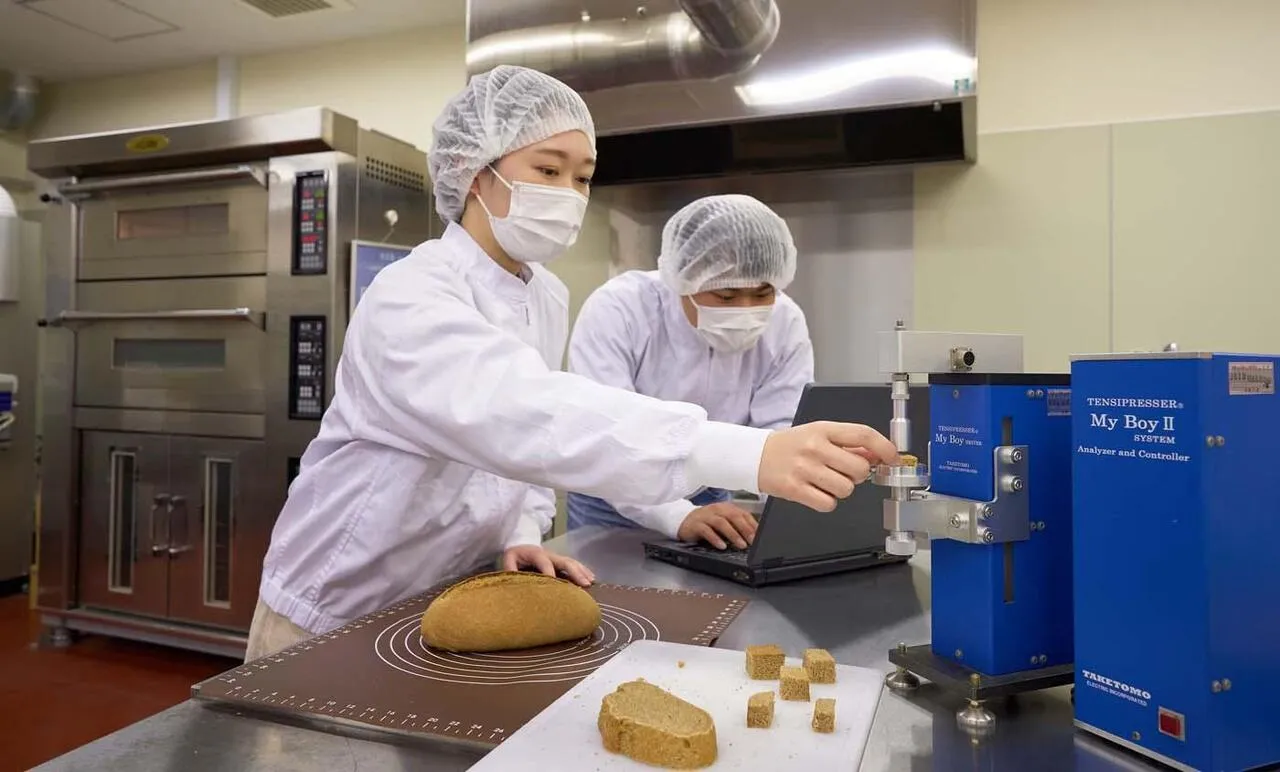
A study by Burton and Lightowler examined ten healthy adults. Participants received white bread in different states: fresh, frozen and thawed, toasted, and frozen, thawed, and then toasted.
The result was interesting: Freezing and subsequent thawing reduced the glucose response compared to fresh homemade white bread. The effect was even stronger in bread that was first frozen, thawed, and then toasted.
However, this doesn’t mean that every person automatically notices a significant difference. The study was small and only examined ten people. Additionally, it focused on white bread and not every possible type of bread.
Nevertheless, it provides an important indication that the storage and preparation of bread can affect metabolic response.
Comparing freezing, thawing, and toasting
| Bread preparation | What happens? | Possible impact |
|---|---|---|
| Fresh bread | Starch is highly broken down after baking | Relatively fast starch digestion possible |
| Let bread cool | Starch molecules begin to reorder | Retrogradation begins |
| Freeze bread | Very low temperatures change water and starch structures | Can affect later starch digestion |
| Thaw bread | Further structural changes can occur | Potentially altered glucose response |
| Thaw + Toast | Cooling combined with reheating | In studies, sometimes shows particularly low glucose response |
| Repeat freezing/thawing | Repeated structural changes and water movements | Can degrade bread quality |
The table shows important tendencies but doesn’t guarantee results for every bread. Type, ingredients, water content, baking method, and storage conditions also play a role.
What does this mean for athletes?
The situation is somewhat more complex for athletes.
Carbohydrates are an important energy source for physical activity. They are particularly relevant for intense or prolonged training sessions, as muscle glycogen is a vital energy source.
Therefore, a lower blood sugar rise is not necessarily better.
Before training
If you need quickly available energy shortly before intense training, easily digestible carbohydrates can be beneficial.
Freshly baked or regular bread can therefore be perfectly suitable depending on the situation.
In everyday life or with a meal for longer satiety
Here a slower starch digestion might be more interesting.
If cooling and retrogradation make some starch available more slowly, this could contribute to a more moderate glucose response. Existing human studies show interesting effects but aren't sufficient to recommend frozen bread as special sports nutrition.
After training
After training, quick carbohydrate supply can be beneficial depending on the training scope and timing of the next effort.
If, for example, you plan to train intensively again the next day, your needs differ from someone who follows a moderate fitness program.
The goal thus determines which type of bread or preparation is appropriate.

How should one freeze and thaw bread?
If the main goal is good quality and practical storage, you can proceed relatively simply:
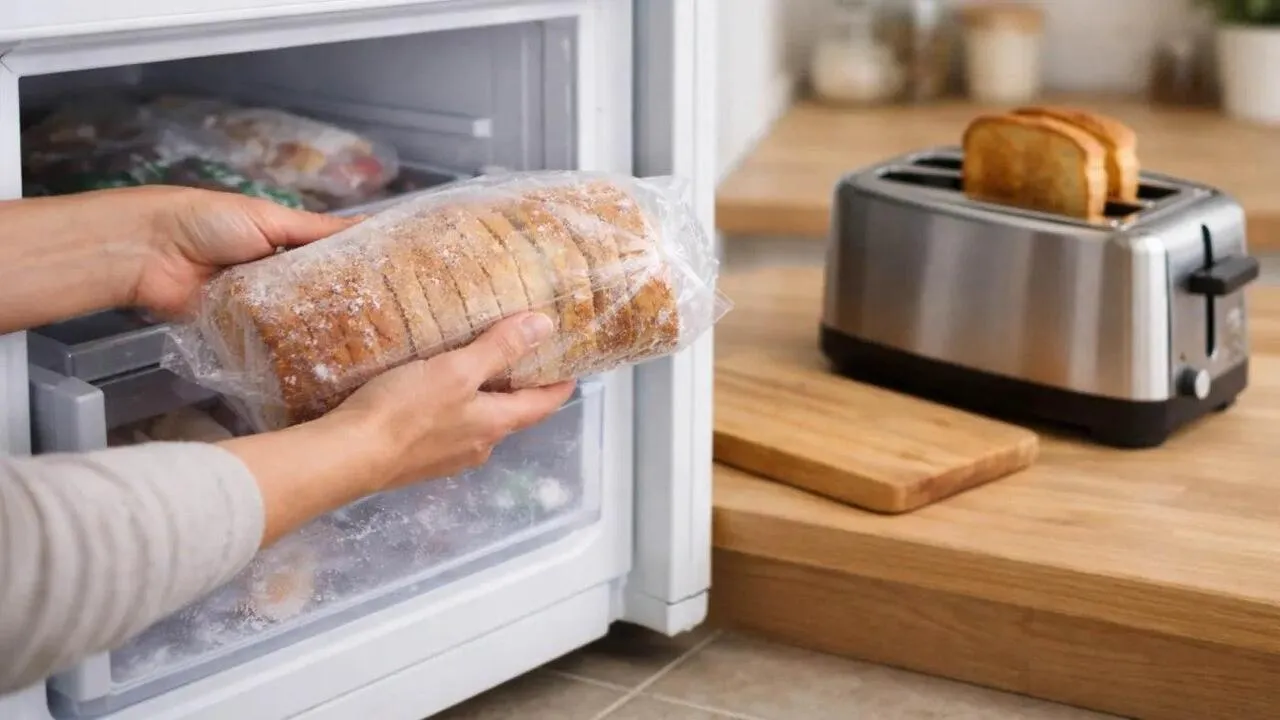
- Freeze bread as freshly as possible.
- Preferably freeze in portions.
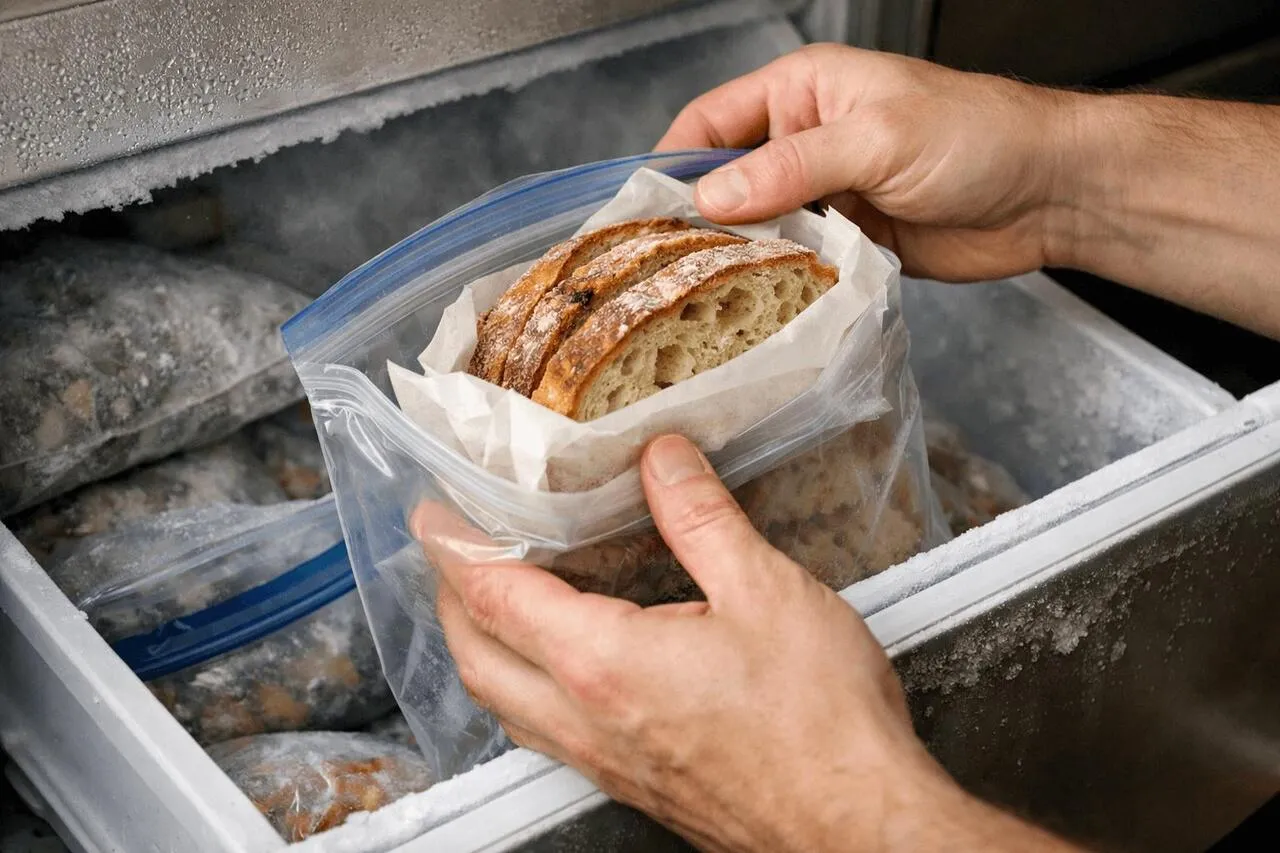
- Pack airtight to avoid freezer burn.
- Thaw at room temperature or in the refrigerator.
- If desired, you can toast the thawed bread.
For food quality, it's also important to avoid unnecessary freeze-thaw cycles. Repeated freezing and thawing can intensify water movements and structural changes, reducing the quality of starchy foods.
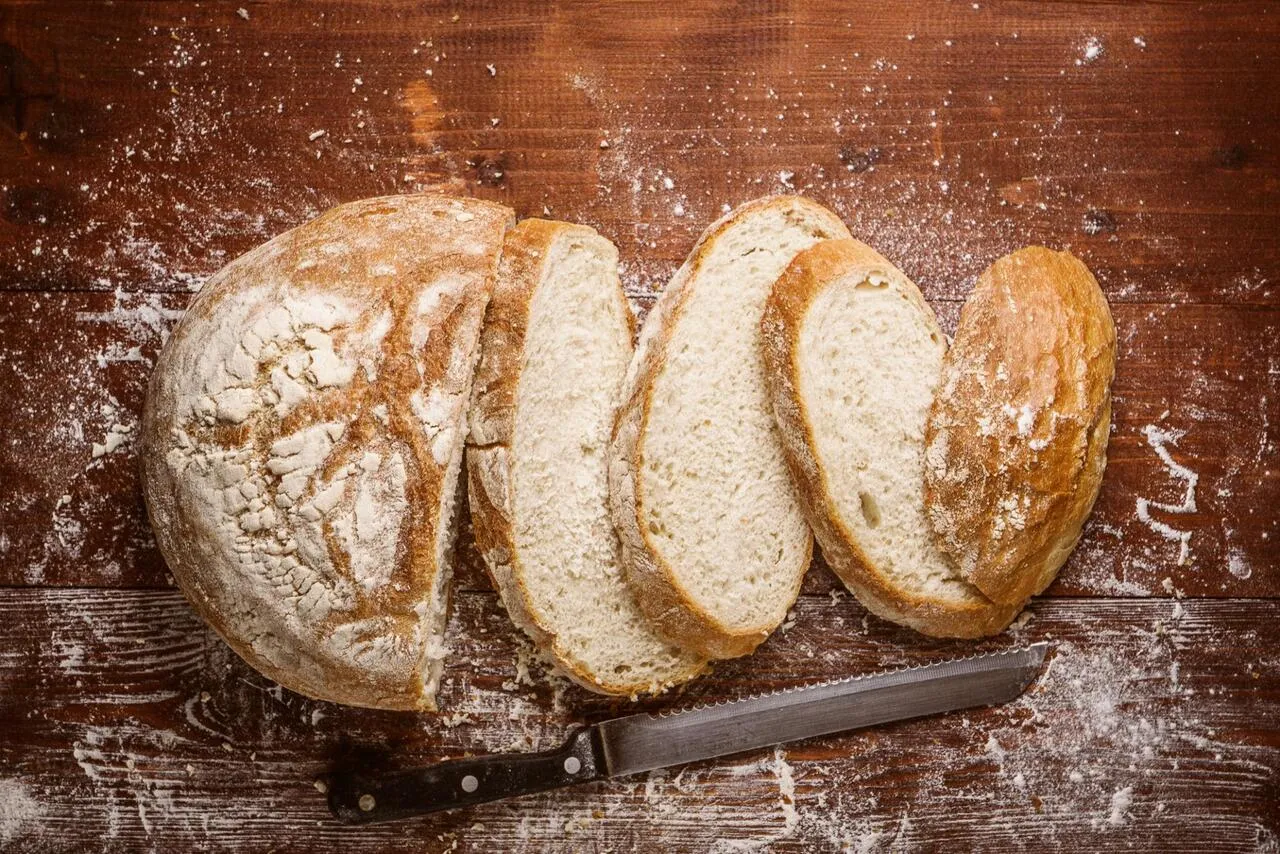
But beware: Retrogradation does not automatically mean "fewer calories"
A common misconception would be to say:
“Frozen bread has fewer calories.”
This is not true.
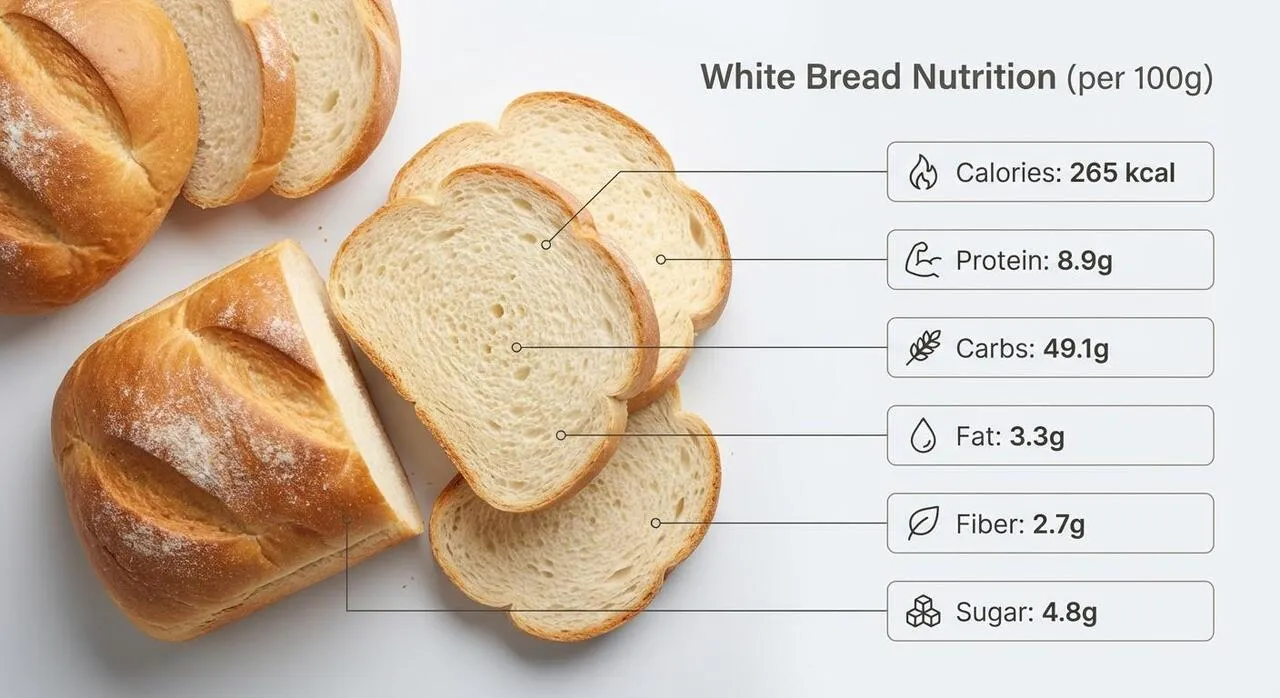
Freezing does not make carbohydrates disappear. The total energy of the bread does not change significantly as a result.
What may change is the structure of the starch and hence its accessibility for digestion.
Some starch may become more resistant to digestion. This can alter the postprandial glucose response.
Not all bread reacts the same
This is a particularly important point.
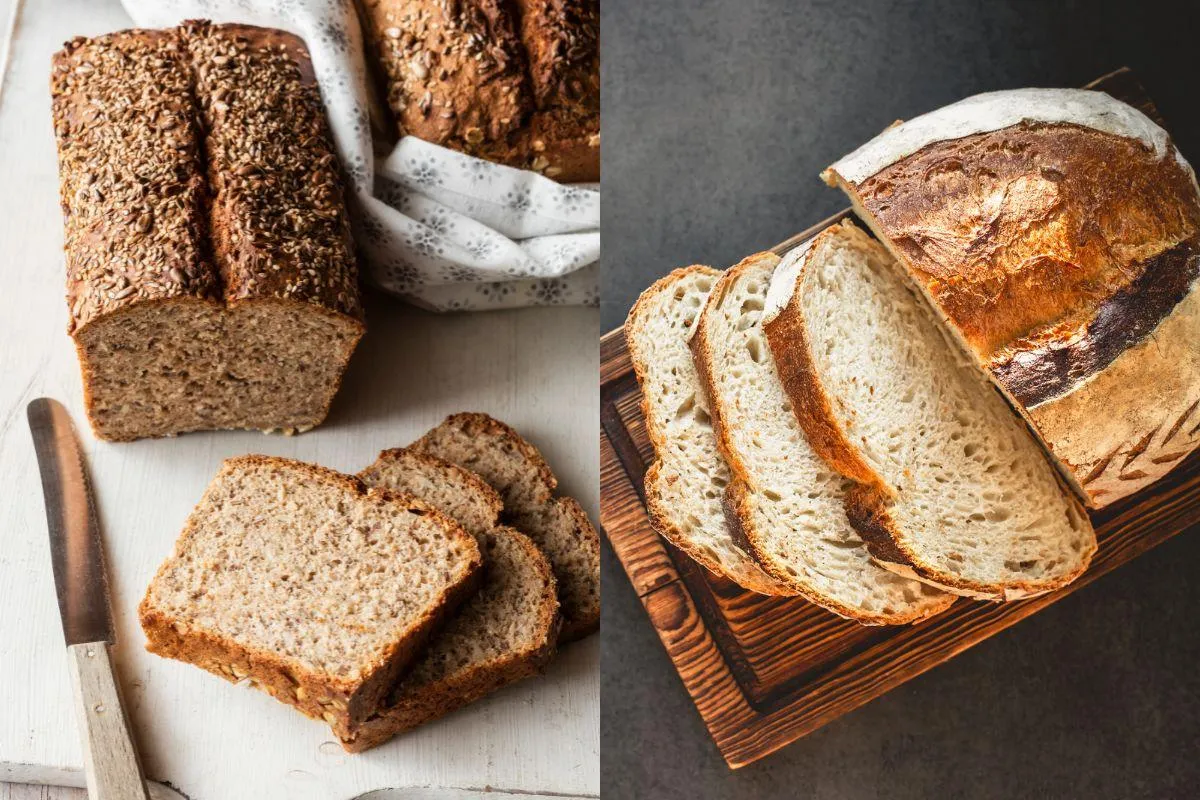
White bread, whole grain bread, sourdough bread, and breads with high fiber content differ in their structure and composition.
The amylose content also plays a role. A higher amylose content can facilitate the formation of certain retrograded structures and thus resistant starch.
Therefore, one cannot simply state:
“Freezing automatically turns every bread into a low-GI food.”
The scientific data rather show that bread processing, cooling, storage, and composition together dictate how quickly the contained starch is digested.
An interesting trick for the fitness kitchen?
Those who like to freeze bread anyway can observe this process with a certain nutritional interest.
A possible routine could be:
Buy or bake bread → portion → freeze → thaw → toast as needed
This is mainly practical and can reduce food waste. At the same time, there are scientific indications that freezing, thawing, and toasting may influence the glucose response of bread.
However, one shouldn't make an exaggerated “fitness hack” statement out of it. The research remains limited, and the effects strongly depend on the bread used and the individual person.

Conclusion
Freezing bread is not just a practical way to extend shelf life. From a scientific perspective, it’s particularly interesting what happens to the starch during cooling and storage.
Through retrogradation, amylose and amylopectin can reorder. Some starch can transition into forms that are digested more slowly or less completely. The formation of resistant starch type 3 makes this process particularly interesting for nutritional science.
A small human study also showed that frozen and subsequently thawed white bread can trigger a lower glucose response than fresh bread. The combination of freezing, thawing, and toasting also showed a significant effect in this study.
For the sports and fitness world, this does not mean that frozen bread is fundamentally better. Before training, fast carbohydrate availability can be useful, whereas at other meals, slower digestion might be more interesting.
The most intriguing point is not “Freezing makes bread healthy,” but:
The way we bake, cool, freeze, thaw, and heat bread can affect the structure of its starch and, therefore, possibly our metabolic response.
Sources
- Burton, P. & Lightowler, H. J. (2008). The impact of freezing and toasting on the glycaemic response of white bread. European Journal of Clinical Nutrition.
- Birt, D. F. et al. (2013). Resistant Starch: Promise for Improving Human Health. Advances in Nutrition. The importance of resistant starch is also described in current reviews on starch and bread structure.
- Fadda, C. et al. Bread Staling: Updating the View. Comprehensive Reviews in Food Science and Food Safety.
- Structural Basis of Resistant Starch (RS) in Bread: Natural and Commercial Alternatives. Foods.
- Bread making technology influences postprandial glucose response: a review of the clinical evidence.
- Recent advances in freeze-thaw starch: Mechanisms, property changes, influencing factors and modification strategies. Carbohydrate Polymers, 2026.