What is 1RM (One-Rep Max) and How to Calculate It?
Are you looking to make your workout program more effective and maximize your performance? Then you should get familiar with the concept of 1RM, or One-Rep Max. 1RM represents the…
Read articleTraining

VO₂max represents the body's maximal oxygen uptake during physical exertion. It describes how much oxygen the body can absorb, transport, and utilize within one minute under maximum effort.
The unit is typically expressed as milliliters of oxygen per kilogram of body weight per minute (ml/kg/min).
Simply put, the more oxygen the body can utilize during intense exertion, the greater its aerobic performance capacity.
Various body systems work together in this process. The lungs absorb oxygen from the air, the cardiovascular system transports it through the blood, and the muscles use it for energy production.
Key factors include cardiac output, blood's oxygen-carrying capacity, and the muscles' ability to utilize oxygen.
Thus, VO₂max is a significant metric in sports science and performance diagnostics.

VO₂max is not only of interest to competitive athletes. It is also closely linked to our overall health.
Cardiorespiratory fitness is one of the key indicators of long-term health. Scientific studies demonstrate that individuals with higher cardiorespiratory fitness are, on average, at lower risk for cardiovascular diseases and have a lower overall mortality rate.
An efficient cardiovascular system supports the body in providing sufficient oxygen even under physical load.
This can be noticeable in daily life: climbing stairs, walking long distances, cycling, or physical labor often become easier.
Interestingly, even individuals with a low fitness level can benefit from improving their endurance performance.
Thus, one does not need to become a marathon runner to do something beneficial for their health.

The most precise method for determining VO₂max is spiroergometry or a cardiopulmonary exercise test.
During this test, the individual exercises on a treadmill or cycle ergometer. The intensity is gradually increased while a special breathing mask measures oxygen intake and carbon dioxide output.
Additionally, heart rate, exercise intensity, and other physiological values can be recorded.
Modern sports watches and fitness trackers can also estimate VO₂max. They use heart rate, speed, training data, and personal information, among other factors.
However, these are estimations and may vary from actual laboratory measurements, depending on the device and individual conditions.
To track progress, these values can still be useful as a guide. It is especially important to consider changes over an extended period.
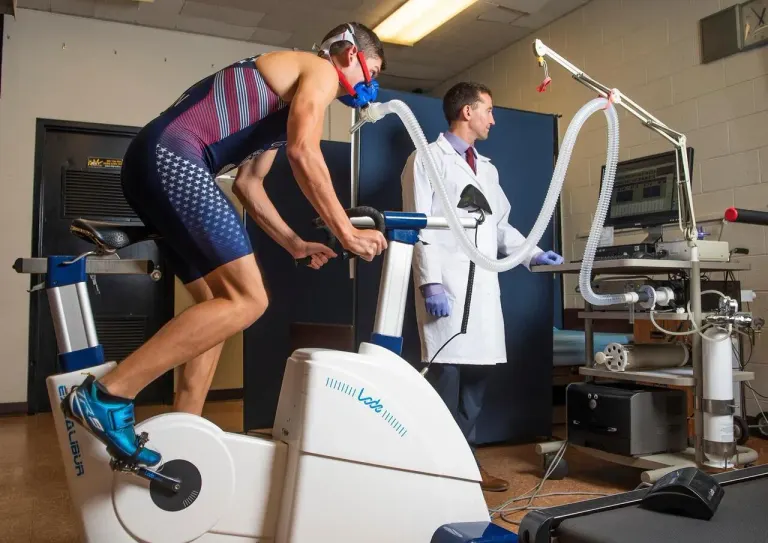
The maximal oxygen uptake is influenced by various factors.
These include:
The interaction between the heart, lungs, blood, and muscles is particularly important.
Mitochondria also play a crucial role. They are responsible for aerobic energy production in muscle cells.
Regular endurance training can lead to several adaptations in the body, such as improved muscle blood flow, increased mitochondrial capacity, and enhanced cardiovascular performance.
As people age, VO₂max tends to decrease. However, regular exercise can slow this decline.

The good news is that VO₂max is trainable. Both beginners and advanced athletes can enhance their maximal oxygen uptake through targeted training.
The crucial elements are regular endurance training, appropriate training intensity, and sufficient recovery.
Moderate Endurance Training
Longer workout sessions at moderate intensity form an important foundation.
Activities such as jogging, cycling, swimming, or brisk walking qualify.
This form of training puts the cardiovascular system under strain for an extended period but can easily be integrated into daily life when done at a moderate load.
High-Intensity Interval Training (HIIT)
HIIT involves alternating intense exercise phases with recovery periods.
A well-known example is the 4×4 interval training, combining four intense four-minute bursts with easy recovery periods.
This training method challenges the cardiovascular system significantly and can effectively improve VO₂max.
Sprint Interval Training (SIT)
SIT combines very short, highly intense exercise bursts with recovery periods.
This training form is physically demanding and suitable for individuals with a solid training foundation.
It is important to adjust the intensity to individual fitness levels. Not every workout needs to be maximally intensive.

A frequently asked question is whether intensive interval training is categorically better than longer training at moderate intensity.
Scientific literature indicates that both forms of training can improve VO₂max.
HIIT can lead to significant improvements, even with relatively minimal time investment. In contrast, moderate endurance training offers a valuable method for increasing training volume and building a stable aerobic base.
Scroll sideways if needed to see all columns.
| Type of Training | Main Advantage | Example |
|---|---|---|
| Moderate Endurance Training | Aerobic Base | 30–60 minutes of cycling |
| HIIT | Intensive Stimuli | 4 × 4 minutes |
| SIT | Very Intense Short Bursts | Short cycling sprints |
| Combination | Varied Stimuli | Base training and intervals |
Which method is more suitable depends on the training status, personal goals, and recovery capacity.
For many people, a combination of different training forms is more effective than focusing solely on one method.
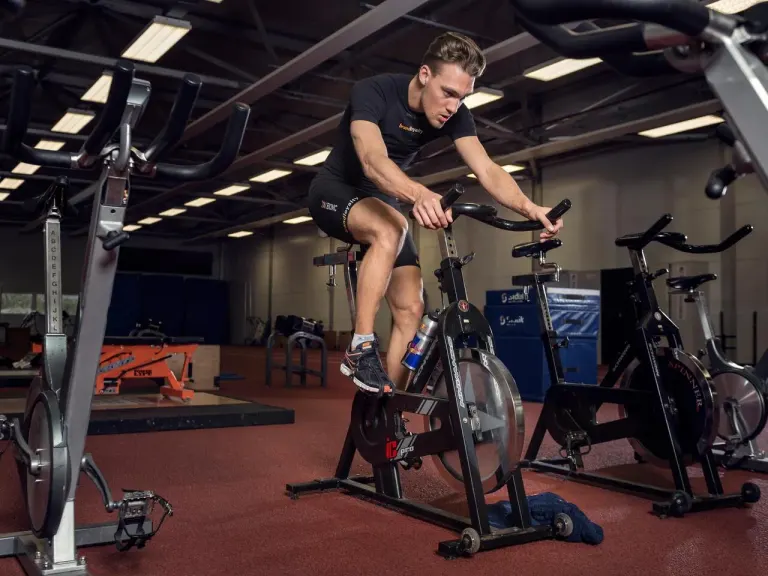
Improving VO₂max does not require daily intensive training.
For many recreational athletes, the following combination can be a reasonable starting point:
Beginners should develop a solid base endurance before regularly undertaking intense intervals.
Recovery also plays a crucial role. Physical adaptations occur not only during training but also during recovery.
Overtraining without adequate recovery can impair performance development.

Strength training and endurance training focus on different physiological aspects.
Traditional strength training primarily enhances muscle strength, muscle mass, and neuromuscular performance.
However, it does not replace targeted endurance training if the main goal is a significant increase in VO₂max.
For those who regularly train in a gym, a combination of strength and endurance training is particularly attractive.
For example, one can pair three strength training sessions with two targeted endurance sessions weekly.
Training plans should be designed to allow sufficient time for recovery.

VO₂max values vary depending on age, gender, fitness level, and measurement method.
Therefore, there is no single value that is ideal for everyone.
For general guidance:
It is particularly important to view one's values in the context of age and training development.
Improving personal baseline values is often more significant than comparing with others.
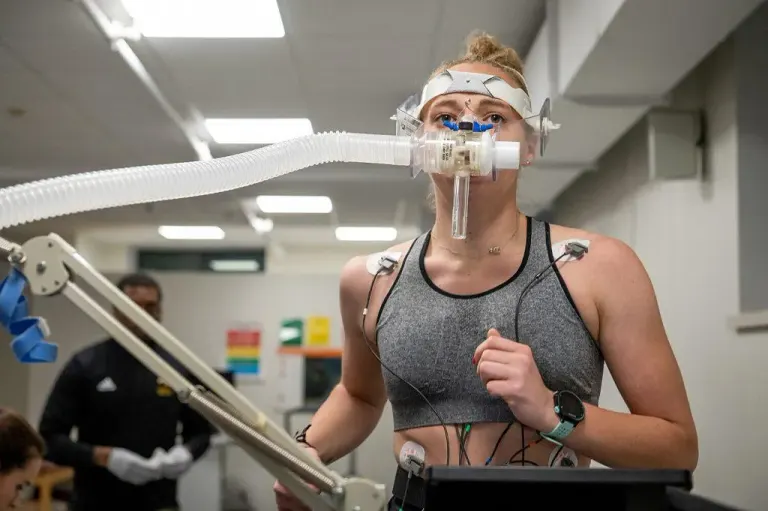
Cardiorespiratory fitness is among the scientifically well-studied health indicators.
Numerous observational studies reveal a link between higher cardiorespiratory fitness and lower mortality rates.
The differences are particularly pronounced between those with very low fitness and those with moderate fitness levels.
However, a high VO₂max does not automatically guarantee longevity.
Nutrition, sleep, genetics, stress, blood pressure, and other health factors also play important roles.
VO₂max should not be seen as the sole health indicator but as an essential component of a broader picture of our physical health.

VO₂max is one of the most intriguing metrics regarding endurance, physical performance, and long-term health.
It indicates how efficiently our body can absorb, transport, and utilize oxygen.
Not only endurance athletes benefit from good oxygen uptake but also individuals seeking to enhance their general fitness and quality of life.
Regular moderate endurance training, targeted interval sessions, and appropriate recovery can positively influence VO₂max.
One neither needs to run marathons nor constantly push their physical limits. The key is to remain active over time and consistently provide the body with suitable training stimuli.
A good VO₂max is not an end in itself or merely a number on a sports watch. It serves as an important indicator of how efficiently our cardiovascular system operates.
Ross et al. (2016)
Importance of Assessing Cardiorespiratory Fitness in Clinical Practice: A Case for Fitness as a Clinical Vital Sign.
American Heart Association – Circulation.
Scientific Publication – Circulation.
The Effect of Exercise Training Intensity on VO₂max in Healthy Adults (2024)
An Overview of Systematic Reviews and Meta-Analyses.
Overview of the impact of various training intensities on maximal oxygen uptake.
Scientific Publication – PubMed.
Physical Activity, Cardiorespiratory Fitness, and Cardiovascular Health (2022)
Clinical Practice Statement of the American Society for Preventive Cardiology.
Scientific recommendations on endurance training, cardiorespiratory fitness, and cardiovascular health.
Comparison of Different Interval Training Methods on Athletes' Oxygen Uptake (2025)
* A Systematic Review with Pairwise and Network Meta-Analysis.*
Investigation of the effects of HIIT, Sprint Interval Training, and other interval methods on VO₂max.

Are you looking to make your workout program more effective and maximize your performance? Then you should get familiar with the concept of 1RM, or One-Rep Max. 1RM represents the…
Read article
This blog provides a detailed analysis of the Heavy Duty training approach, including training plans, scientific studies, advantages and disadvantages, as well as concrete…
Read article
Sport is the cornerstone of a healthy lifestyle, signaling a fresh start for many. This blog post offers beginners step-by-step guidance, motivation sources, and success tips for…
Read article