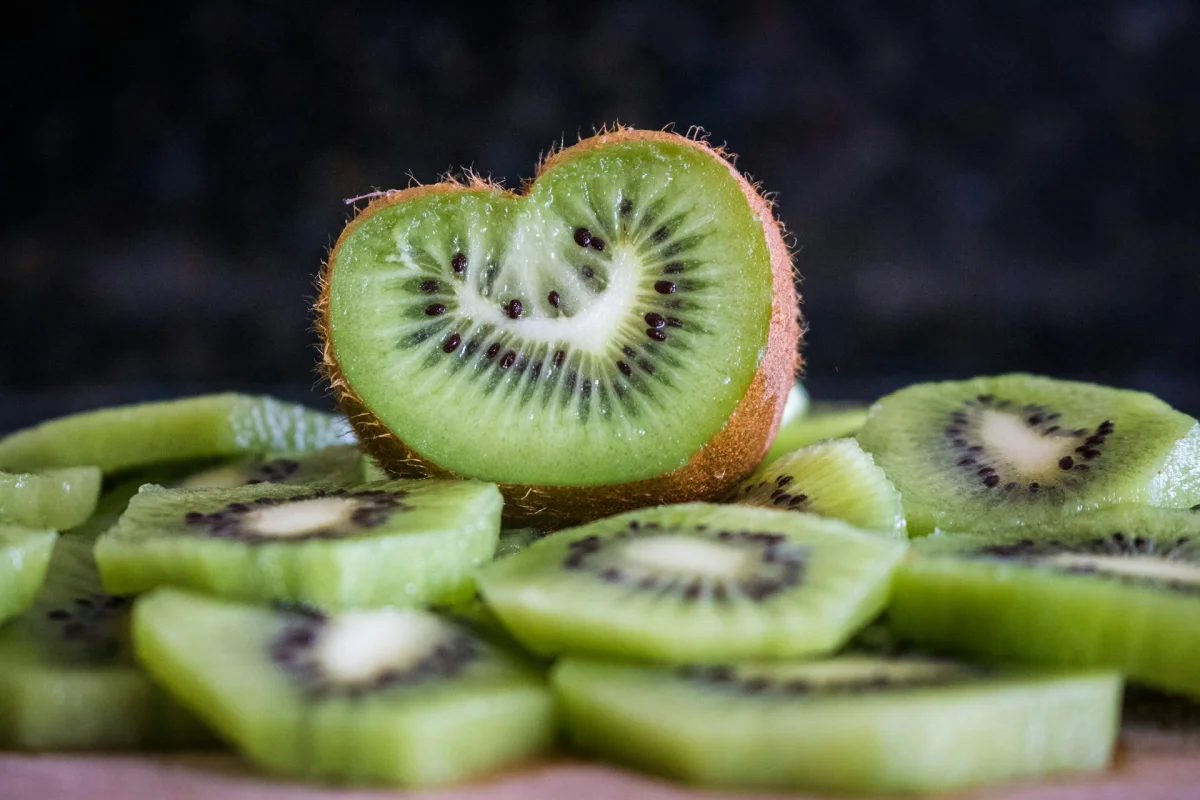
The kiwi is a true multi-talent when it comes to micronutrients. A single fruit provides over 100% of the daily vitamin C requirement. This is more than an orange or lemon! Moreover, it contains valuable antioxidants, fiber, and enzymes like actinidin that improve digestion.
| Nutrient (per 100 g) | Amount | Effect on the body |
|---|---|---|
| Calories | 41 kcal | Very low in calories, ideal for diets |
| Carbohydrates | 8.7 g | Quick energy source |
| Fiber | 2.1 g | Promotes digestion & satiety |
| Protein | 1.1 g | Supports recovery |
| Vitamin C | 92.7 mg | Strengthens the immune system & collagen production |
| Vitamin K | 40 µg | Essential for blood clotting & bones |
| Potassium | 312 mg | Regulates blood pressure & muscle contraction |
| Folic Acid | 25 µg | Supports cell division & energy production |
Kiwi and the Immune System: Natural Shield in Winter
Studies indicate that regular kiwi consumption reduces the duration and intensity of colds.
In a New Zealand study (Carr et al., 2013), it was found that adults who ate two gold kiwis daily were less frequently and less severely ill than the control group.
This is due to the combination of:
- Vitamin C (boosts immune cells)
- Polyphenols (neutralize free radicals)
- Carotenoids & Flavonoids (anti-inflammatory)
In winter, when sunlight is scarce and stress burdens the immune system, kiwi is a perfect daily supplement – entirely without dietary supplements.
Kiwi and Fitness: Recovery, Muscles & Digestion
Kiwis support athletes on several levels:
- Recovery: Vitamin C promotes collagen synthesis, which is crucial for muscles, tendons, and joints.
- Digestion: The enzyme actinidin aids in the breakdown of protein – ideal after protein-rich meals.
- Blood Pressure & Electrolytes: Potassium helps regulate fluid balance and muscle contraction – important after intense workouts.
- Fat Burning: With its high density of micronutrients and fiber, you stay fuller longer – helpful for a defined body shape.
Tip: A kiwi after a workout or as part of a smoothie with spinach and protein powder is a true recovery miracle.
Kiwi and Sleep Quality – The Surprising Effect
Interestingly, a study from Taipei Medical University (Lin et al., 2011) shows that consuming two kiwis daily before bedtime improves sleep quality by up to 40%.
Reason: Kiwi contains serotonin and antioxidants that positively influence sleep rhythms – perfect for athletes in recovery phases.

Why Kiwi is Ideal for Winter
In winter, our vitamin D and C levels drop – two crucial factors for energy and defenses. The kiwi naturally fills these gaps. Additionally, it:
- acts as a base (against acidity from winter diets like meat or coffee)
- is antioxidative (against oxidative stress)
- enhances mood due to serotonin precursors
And: Kiwis are long-lasting, easy to store, and affordable even in the cold season – a plus for all who want to stay healthy in winter.

How to Best Integrate Kiwi
- In the morning in a smoothie (e.g., with banana, spinach, and yogurt)
- Pure or in a shake after training
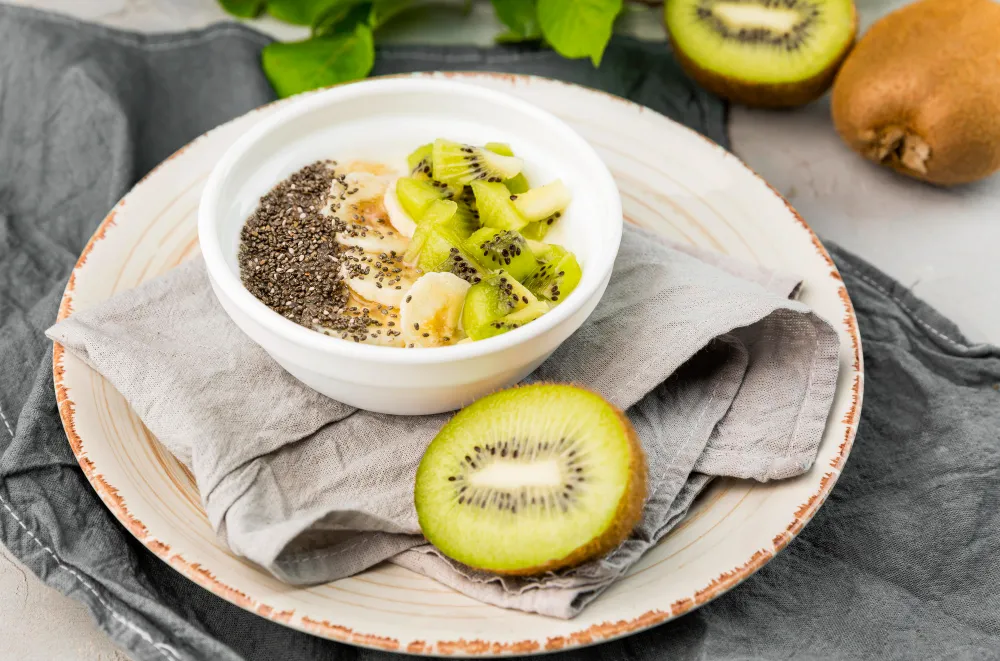
- In bowls or over oatmeal
- As a kiwi salad with lemon, honey, and some mint
Tip: The skin of organic kiwis is edible! It contains additional fiber and antioxidants – just wash well.
Scientific Overview
| Study | Year | Result |
|---|---|---|
| Carr et al., Univ. Otago (NZ) | 2013 | Kiwi strengthens immune system and reduces the duration of colds |
| Lin et al., Taipei Med. Univ. | 2011 | Kiwi improves sleep quality |
| Stonehouse et al., Nutrients Journal | 2012 | High vitamin C content promotes psychological well-being |
Conclusion
The kiwi is small, green, and inconspicuous – yet it contains a powerful punch of health. Especially in the colder months, it is an ideal companion for your immune system, recovery, and fitness. Whether in a smoothie, pure, or in muesli: Those who eat one or two kiwis daily do something really good for their body – completely naturally.