The Power of Collagen: What You Need to Know
Collagen is a vital protein in the body, comprising about 30% of total protein. It plays a crucial role in the structure of skin, bones, muscles, and connective tissue.…
Read articleSupplement
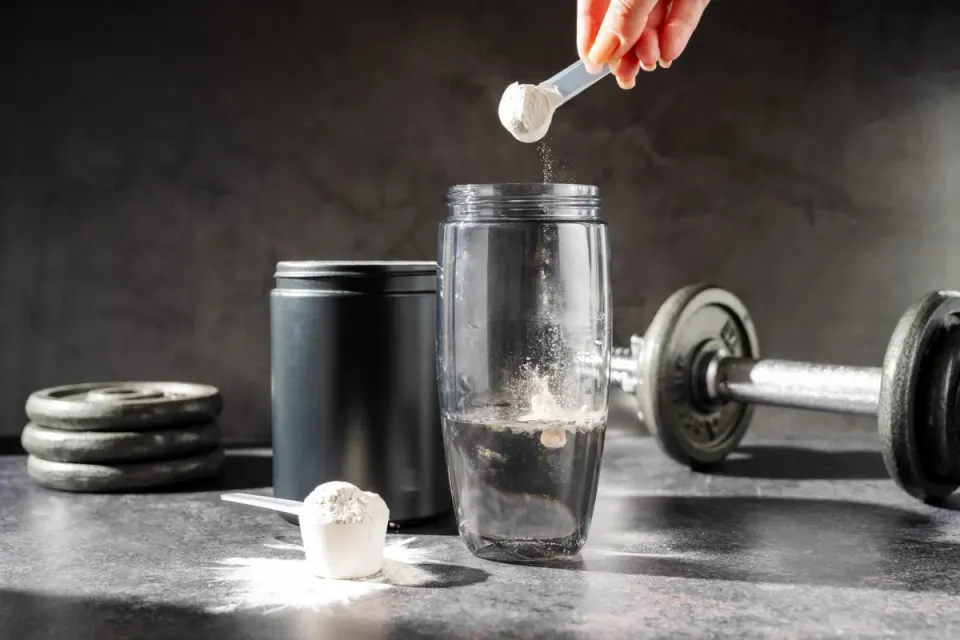
Creatine monohydrate is the classic and most scientifically studied form of creatine. It consists of creatine and a bound water molecule.
In the body, creatine supports the rapid provision of energy. It helps to restore adenosine triphosphate (ATP), the most essential immediate energy carrier for our cells, more quickly during intense exertion.
This is particularly significant for short and powerful movements. These include exercises such as heavy squats, bench presses, sprints, or intensive interval training.
Through regular intake, creatine stores in the muscles can be increased. This often enables athletes to handle more training volume and create better conditions for strength and muscle gains in the long run.
Another advantage: Creatine monohydrate has been intensively studied over decades. Its efficacy and safety are significantly better documented than those of most newer forms of creatine.
Creatine HCl stands for creatine hydrochloride. In this form, creatine is combined with hydrochloric acid to form a creatine salt.
The biggest difference compared to monohydrate lies in its water solubility. Creatine HCl dissolves significantly more easily in water. Exactly this property is often advertised as a special advantage by manufacturers.
The argument here is: If a supplement dissolves better, it might also be better absorbed by the body.
However, it’s important to differentiate between two different things here: solubility and actual absorption capability.
Just because a powder dissolves more easily in water does not automatically mean that more creatine reaches the muscles or that athletic performance is improved significantly.
This requires controlled human studies.
Scroll sideways if needed to see all columns.
| Property | Creatine Monohydrate | Creatine HCl |
|---|---|---|
| Water Solubility | Lower | Significantly higher |
| Scientific Data | Very comprehensive | Still limited |
| Muscle Growth | Well-researched | Less researched |
| Strength Gain | Well-proven | Initial comparative data |
| Absorption in the Body | Very well studied | No confirmed advantage |
| Price | Usually cheaper | Often more expensive |
| Long-term Safety | Extensively documented | Less data |
Here lies one of the greatest distinctions between scientific facts and marketing claims.
Creatine HCl is indeed much more water-soluble than creatine monohydrate. This is chemically verifiable.
Some manufacturers deduce from this that creatine HCl also has a significantly better bioavailability and could therefore achieve the same effect in smaller amounts.
Yet this conclusion is not sufficiently supported by science.
Better solubility does not automatically mean better uptake in the muscles. What ultimately matters is how much creatine is actually stored in the muscle and whether measurable improvements in training performance emerge from it.
A scientific review from 2022 concludes that there is no convincing evidence that creatine HCl is superior to monohydrate in terms of uptake, efficacy, or safety.
Also, the claim that significantly smaller amounts of creatine HCl are generally needed is not yet sufficiently confirmed.
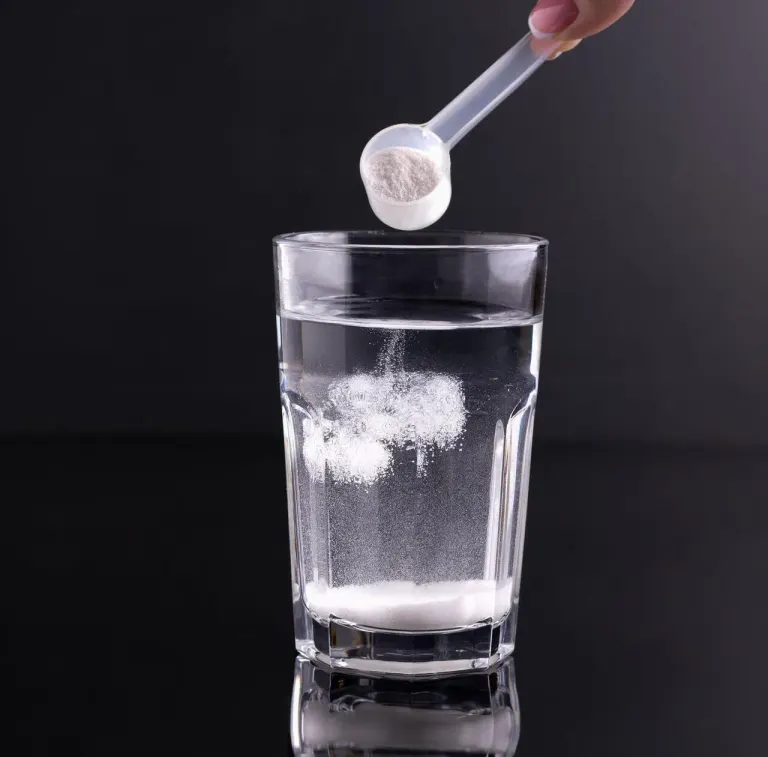
Especially interesting is a 2025 randomized, placebo-controlled study that directly compared creatine HCl to creatine monohydrate.
31 team sport athletes participated in the study. Over a period of eight weeks, participants received either creatine monohydrate, creatine HCl, or a placebo daily.
The researchers examined strength values, jump performance, and changes in body composition, among other things.
The result: No statistically significant differences could be determined between creatine HCl and creatine monohydrate.
Both forms of creatine showed comparable results in various performance parameters. The claim that creatine HCl is fundamentally superior was not confirmed by this study.
However, it must be considered that the study was relatively small with only 31 participants. Further investigations are necessary for definitive statements about long-term differences.
Nevertheless, the current state of research clearly suggests that the classic monohydrate remains the scientifically better-substantiated choice.
If the goal is more strength, better training performance, and long-term muscle growth, the existing scientific evidence clearly favors creatine monohydrate.
That does not mean that creatine HCl is ineffective. Rather, sufficiently convincing studies proving an additional advantage over the classic monohydrate are lacking.
When it comes to muscle building, the speed at which a supplement dissolves in water is not crucial. What matters is whether it effectively increases creatine stores in the muscles, thereby enhancing training performance.
Therefore, there is currently no compelling reason to spend significantly more money on creatine HCl.

For most healthy adults, a daily intake of 3 to 5 grams of creatine monohydrate has proven effective.
A loading phase is not mandatory. Those who take a consistent amount daily can also fill their creatine stores. It simply takes a bit longer.
Scroll sideways if needed to see all columns.
| Intake | Recommendation |
|---|---|
| Daily Amount | 3–5 g |
| Loading Phase | Not necessary |
| Timing of Intake | Relatively flexible |
| Training Days | Consume daily |
| Non-Training Days | Also consume daily |
| Duration of Intake | Regular and long-term possible |
What is most important is regularity. Whether creatine is taken in the morning, before, or after training is less crucial for the long-term effect.
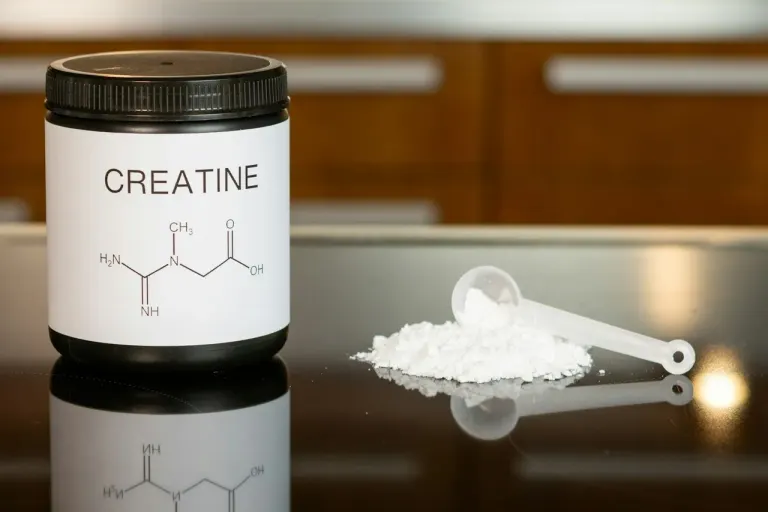
Creatine monohydrate is considered well-researched and generally well-tolerated in the recommended amounts for healthy adults.
A possible side effect is weight gain due to increased water retention within the muscles. This is not equivalent to an increase in body fat.
Higher dosages may also lead to gastrointestinal issues.
Creatine HCl is often advertised as a more stomach-friendly alternative. However, sufficient high-quality long-term studies proving it actually causes fewer side effects are missing.
People with existing kidney diseases or other relevant health issues should consult a doctor before taking creatine. It's also important to consider that creatine supplementation can affect creatinine levels in the blood without automatically indicating kidney damage.

For most strength athletes, fitness enthusiasts, and individuals looking to support their muscle building, creatine monohydrate is the most sensible choice.
It offers a good combination of scientifically proven effects, extensive safety research, and a comparatively affordable price.
Creatine HCl can be an alternative if someone prefers better solubility or personally tolerates the product better. However, one should not assume that a smaller amount will automatically achieve the same effect as the usual monohydrate dosage.
In the end, you should not be persuaded by new product names or major marketing promises. A supplement is not automatically better just because it sounds more modern.

The comparison between creatine HCl and creatine monohydrate shows that not every new supplement form automatically represents an improvement.
Creatine HCl does indeed have significantly better water solubility. However, this does not translate into a proven advantage in muscle building, strength increase, or muscle uptake.
Classic creatine monohydrate remains the first choice. It is extensively researched, effective, well-tolerated, and generally much more affordable.
Those looking to improve their training performance and build muscle in the long term do not necessarily need to switch to the latest form of creatine.
Sometimes, the time-tested product is indeed the better choice.
The following scientific publications form the basis for this blog:
1. Kreider, R. B. et al. (2017)
International Society of Sports Nutrition position stand: Safety and efficacy of creatine supplementation in exercise, sport, and medicine.
Journal of the International Society of Sports Nutrition.
DOI: 10.1186/s12970-017-0173-z.
2. Kreider, R. B. et al. (2022)
Bioavailability, Efficacy, Safety, and Regulatory Status of Creatine and Related Compounds: A Critical Review.
Nutrients, 14(5), 1035.
3. (2025)
Creatine monohydrate versus creatine hydrochloride on strength and body composition in elite team-sport athletes: A placebo-controlled randomized clinical trial comparing low dosages.
Journal of the International Society of Sports Nutrition.
Published on July 16, 2025.
4. (2025)
Part II. Common questions and misconceptions about creatine supplementation: What does the scientific evidence really show?
Journal of the International Society of Sports Nutrition.

Collagen is a vital protein in the body, comprising about 30% of total protein. It plays a crucial role in the structure of skin, bones, muscles, and connective tissue.…
Read article
This blog reveals which supplement combinations truly make sense – from Protein + Creatine to D3 + K2 and Magnesium + Zinc. Through scientific studies, dosage recommendations, and…
Read article
Protein powder can be a valuable support in weight loss – provided it is used correctly. In this blog, you will learn how protein shakes can promote fat loss, protect muscles, and…
Read article