Breakfast – truly the most important meal of the day?
Approx. 8 min read57 Views
“Breakfast is the most important meal of the day.” Many of us have heard this phrase countless times. A good breakfast is said to provide the body with energy, enhance concentration, and even help control body weight. But is this actually true?
Modern nutritional research presents a much more nuanced picture. Breakfast can certainly be part of a healthy diet, but there is no universal rule that dictates everyone must eat in the morning. What truly matters is the overall diet, the quality of the food, and individual needs.
Why is breakfast considered so important?
After a night's rest, the body hasn't consumed any food for several hours. This often leads to the assumption that the body needs new energy in the morning. A breakfast can supply carbohydrates, protein, fiber, vitamins, and minerals, thus making an important contribution to daily nutrition.
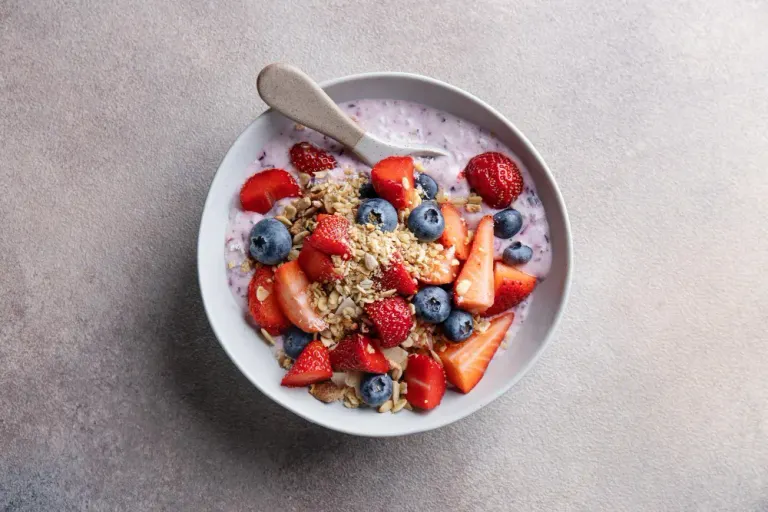
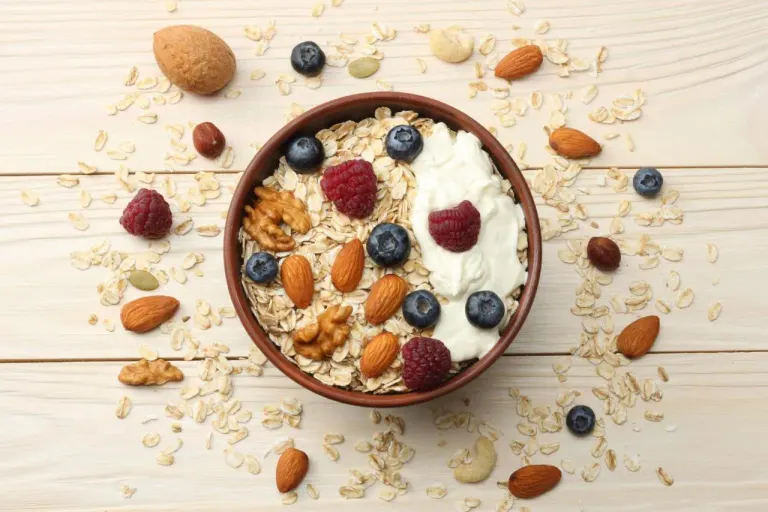
Especially for people who feel hungry in the morning or are physically or mentally active, a balanced breakfast can be beneficial. The selection of food also plays a key role. A breakfast consisting of oatmeal, natural yogurt, fruits, and nuts provides a different nutrient composition than sugary cereals and sweet pastries.
However, the statement “Breakfast is the most important meal of the day” cannot be scientifically confirmed unequivocally. There is insufficient evidence that breakfast is inherently more important than lunch or dinner.
Breakfast and body weight – does it help with weight loss?
A common argument for breakfast is that eating it regularly helps with weight loss. For a long time, it was believed that people who have breakfast feel less hungry and therefore consume fewer calories throughout the day.
Scientific studies, however, paint a more complex picture.
A systematic review and meta-analysis of randomized controlled trials, published in the BMJ in 2019, investigated the relationship between breakfast, body weight, and energy intake. The analysis found no evidence that eating breakfast necessarily leads to weight loss. In the studies examined, individuals who ate breakfast consumed more energy per day on average. However, many of the studies were relatively short and of limited quality.
Another meta-analysis of randomized trials reached a similar conclusion: individuals who skipped breakfast experienced slightly more weight loss over the trial period. However, no clear benefits on body fat or other parameters of body composition were observed.
This does not mean that breakfast is detrimental to one's figure. It suggests, rather, that breakfast alone is not a decisive factor for body weight. The overall energy balance and, more importantly, the quality of nutrition throughout the day is crucial.
What happens when you skip breakfast?
Skipping breakfast is often automatically deemed unhealthy. In reality, individuals react to it in varied ways.
Those who aren't hungry in the morning and prefer to eat later aren't necessarily following a worse diet by doing so. Conversely, some individuals experience strong hunger by mid-morning, feel unfocused, or tend to eat large quantities later.
A recent systematic review from 2025 examined 66 studies on skipping breakfast and identified links with various metabolic, health, and behavioral factors. The authors also emphasize that breakfast patterns are influenced by many factors and that not every observed connection implies that skipping breakfast itself is the cause.
Thus, the statement “Skipping breakfast is unhealthy” should be taken with as much caution as the assertion “Breakfast is absolutely necessary.”
Breakfast and concentration
The impact of breakfast on mental performance is also often discussed. Especially among children and adolescents, there are indications that breakfast and its composition can affect cognitive performance and school-related tasks. A systematic review, for example, explored the relationship between breakfast composition, energy intake, and cognitive or academic performance.
For healthy adults, the data is less clear-cut. A recent systematic review investigated whether breakfast before physical activity influences cognitive performance. The five included studies, involving only 70 participants in total, showed no definitive advantage of eating breakfast over skipping it. Given the small sample size and varied research methods, these findings should be interpreted cautiously.
What this shows is that whether one functions better in the morning after eating breakfast can vary from person to person.
Not just the time, but the quality counts
When eating breakfast, the choice of food is particularly important. A healthy breakfast does not have to be complicated or particularly large.
A good combination might include the following components:
Scroll sideways if needed to see all columns.
Food Group
Examples
Possible Benefits
Whole Grain Products
Oatmeal, whole grain bread
Fiber and longer-lasting satiety
Protein Sources
Natural yogurt, eggs, quark
Support of protein supply
Fruits
Berries, apple, banana
Vitamins, minerals, and fiber
Nuts & Seeds
Almonds, walnuts, chia seeds
Unsaturated fatty acids and minerals
Drinks
Water, unsweetened tea
Fluid supply
Less beneficial breakfasts are those primarily made up of highly processed and sugar-rich foods, such as very sugary cereals, sweet pastries, or heavily sweetened beverages.
A breakfast rich in fiber and a good protein source can support a balanced diet.
Is breakfast particularly important for athletes?
For individuals who regularly exercise, the importance of breakfast heavily depends on training time and the type of workout.
For instance, those engaging in intensive training sessions in the morning may benefit from an earlier meal, especially if it's been a while since their last meal the previous evening. Carbohydrates can serve as an energy source in this scenario.
Conversely, during lighter workouts, some people may manage just fine without eating beforehand. Here, factors such as training intensity, duration, individual tolerance, and personal goals play a significant role.
For those focused on muscle building, ensuring sufficient protein intake throughout the day is crucial. Breakfast can provide a great opportunity to consume high-quality protein.
Breakfast or no breakfast – what is better?
Scientific data does not support a simple answer.
For some, breakfast is a meaningful and enjoyable meal. Others are not hungry in the morning and manage just fine eating later. Both options can align with a healthy diet.
More important than the question of whether to eat breakfast is the question of how one nourishes themselves throughout the day.
A person who eats breakfast but consumes mostly highly processed, nutrient-poor foods throughout the rest of the day does not automatically eat healthier. Conversely, skipping breakfast does not automatically equate to an unhealthy diet.
Skipping breakfast automatically leads to weight gain
No clear evidence for this
Breakfast can be beneficial for athletes
Yes, depending on training and individual goals
What does a good breakfast look like?
If you enjoy breakfast, it should be as balanced as possible. A simple combination of whole grains, a protein source, fruit or vegetables, and healthy fats can form a good foundation.
For example:
Oatmeal + natural yogurt or quark + berries + nuts
or
Whole grain bread + egg + tomatoes or cucumber + fruit
Even a simple breakfast doesn’t need to be perfect. What matters is nutrition throughout the day, not just a single meal.
Conclusion
Breakfast is not automatically the most important meal of the day. While the statement sounds convincing, it is not definitively supported by current scientific research.
Breakfast can be a meaningful meal, especially if one is hungry in the morning, is physically active, or finds it helps them to achieve a balanced diet more easily. On the other hand, those who aren’t hungry in the morning and prefer to eat later do not necessarily have to fear negative health consequences.
There is also no compelling evidence that breakfast inherently aids in weight loss. Some randomized studies even found slightly higher energy intakes among individuals who ate breakfast. However, these results should be cautiously interpreted due to partly short study durations and methodological constraints.
Therefore, the most important meal is not necessarily breakfast but rather the diet as a whole. A balanced diet with plenty of vegetables and fruits, whole grains, protein sources, healthy fats, and as few highly processed foods as possible is far more important in the long run than the timing of one’s first meal of the day.
Sources
Sievert K. et al. (2019): Effect of breakfast on weight and energy intake: systematic review and meta-analysis of randomised controlled trials.BMJ, 364.
Bonnet J. et al. (2020): Breakfast Skipping, Body Composition, and Cardiometabolic Risk: A Systematic Review and Meta-Analysis of Randomized Trials.Journal of the Academy of Nutrition and Dietetics.
Minari T. P., Pisani L. P. (2025): Skipping breakfast and its wide-ranging health consequences: A systematic review from multiple metabolic disruptions to socioeconomic factors.Nutrition Research, 141, 34–45.
Adolphus K. et al. (2014): The effect of breakfast composition and energy contribution on cognitive and academic performance: a systematic review.The American Journal of Clinical Nutrition, 100(2), 626–656.
Systematic review (2024/2025): Systematic review on the effects of exercise with and without breakfast consumption on cognitive performance in healthy adults.BMC Psychology.