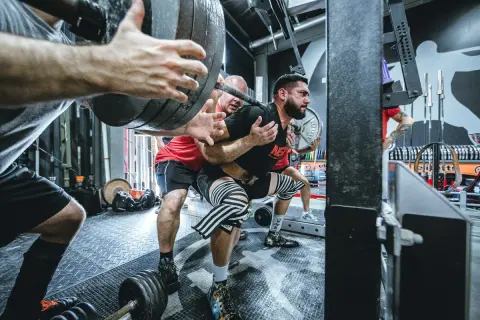
If you scroll through Instagram or TikTok, it almost feels absurdly normal:
20–25 sets of chest.
30 sets of back.
“One more burnout set to finish.”
And if you do less, the question immediately arises:
👉 “Am I even training hard enough?”
The truth is uncomfortable – but liberating:
A large portion of these sets is pure garbage.
They're known as junk sets.

What are junk sets anyway?
A junk set is a training set that:
- no longer stimulates any relevant muscle growth
- doesn't provide any additional strength gain
- but increases fatigue, stress, and recovery problems
In short:
👉 Effort without return
These sets may feel "hard", they look brutal on camera –
but your body just reacts with: "Thanks, but unnecessary."
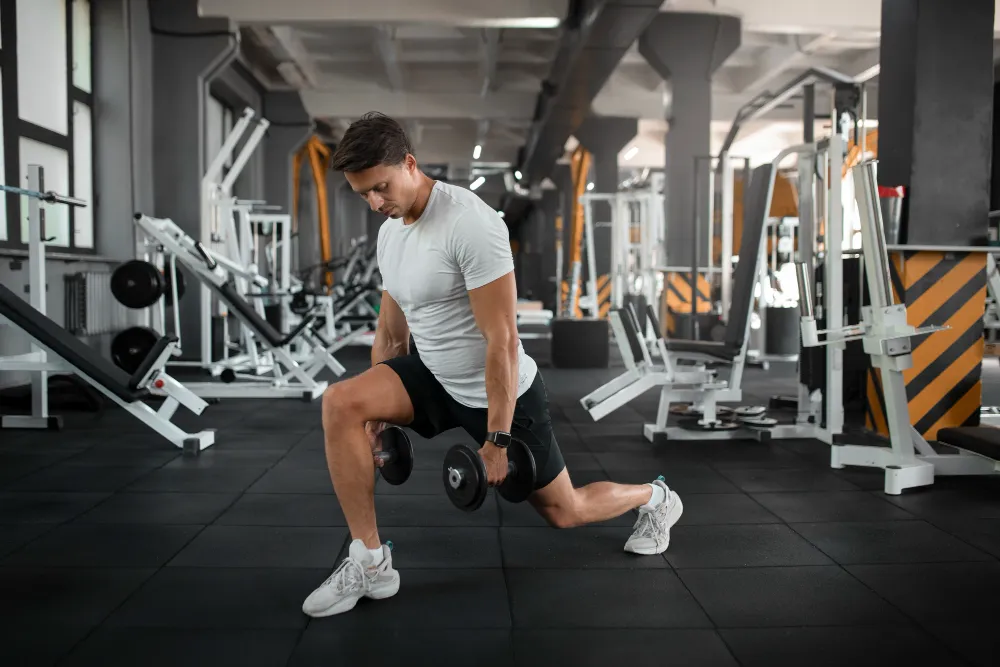
The biggest misconception: More volume = more muscles
Many believe:
“If 10 sets are good, then 20 sets are twice as good.”
Unfortunately, the human body does not function linearly.
Muscle building follows the principle of diminishing returns:
- The first sets → very effective
- Additional sets → diminished benefit
- Too many sets → no benefit + harm
Beyond a certain point, you're no longer training muscles,
but merely your fatigue.

When does a set become a junk set?
A set very likely becomes a junk set if:
- your performance drops significantly
- you reduce weights just to "rack up sets"
- your RIR is consistently over 4–5
- you're just pumping without generating tension
- your focus is gone and technique deteriorates
The muscle then gets no meaningful stimulus –
but the nervous system and recovery continue to suffer.
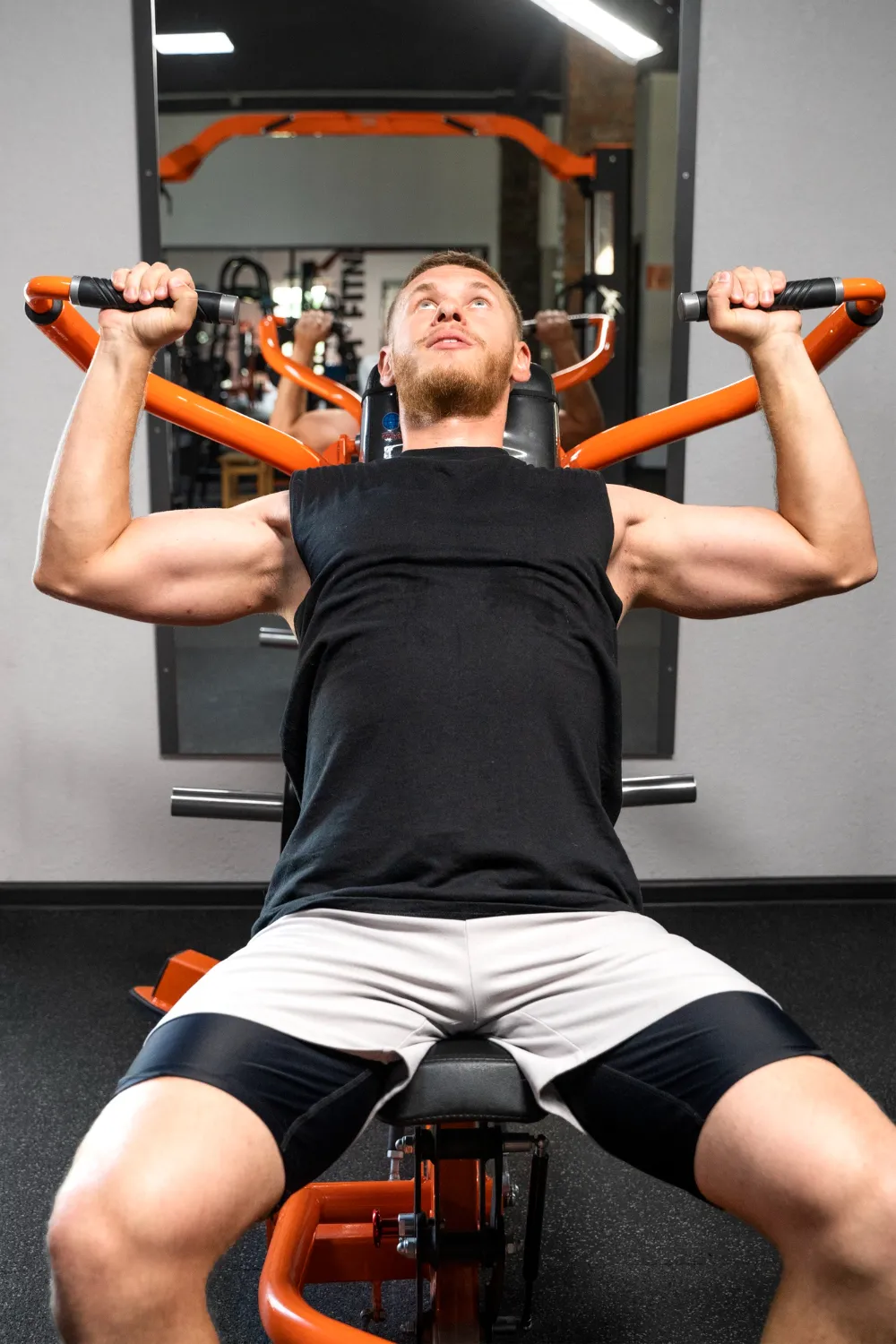
Social media has a junk set problem
Influencers often show:
- extreme volume plans
- endless drop, burnout, and rest-pause sets
- training daily to absolute failure
Why?
- It looks intense
- It sells programs
- It drives clicks
What you don't see:
- many are not natural
- they often have 10–15 years of training experience
- sleep, nutrition, and recovery are optimized
- or they are constantly overloaded, they just don't say it
👉 What works on social media doesn’t necessarily work for your body.

Scientifically speaking: How many sets make sense?
Studies show quite clearly:
- Muscle growth predominantly occurs within the first 5–10 hard sets per muscle/week
- beyond that, the effect decreases sharply
very high volumes increase:
Cortisol, injury risk, overtraining, and performance plateaus.
More volume is no substitute for quality.

Quality always beats quantity
An effective set is:
- near muscle failure (RIR 0–2)
- technically clean
- with full concentration
- with progressive overload
5 such sets beat 15 half-hearted ones.
If after 12 sets, you think:
“I’ll do 5 more because it’s in the plan”
… then you’re not training for muscles,
but for your ego.

Junk sets hinder progress – not the opposite
Many wonder:
- no strength increase
- poor pump
- constant fatigue
- joint problems
- decreased motivation
And the reaction?
👉 Even more sets.
Often, the opposite is needed:
- reduce volume
- increase intensity
- focus on progression
Fewer sets – better results.

How do you know if you're doing too many sets?
Ask yourself these questions honestly:
- Am I increasing my weights or repetitions?
- Do I feel powerful in training?
- Am I fully recovering by the next session?
- Or am I constantly training "empty"?
If progress is lacking, it’s almost never due to too few sets.
Conclusion: Junk sets are the silent muscle killer
More training is not automatically better.
Better training is better.
Junk sets:
- look hard
- feel industrious
- but bring little progress
If you want to build muscle, train:
- targeted
- intensively
- controlled
- with meaningful volume
Your body doesn’t need a training marathon.
It needs clear, strong stimuli – and then recovery.